EVs offer a more reliable & sustainable long-term solution amid ethanol row, claims study

According to a study, electric vehicles offer a more reliable and sustainable long-term solution for India's mobility transition amid ongoing ethanol row.


Amid the ongoing ethanol row, it has become a confusing situation for many aspiring vehicle buyers. The confusion and fears around the ethanol-blended petrol's impact on vehicles have been deterring many aspiring vehicle buyers from purchasing vehicles, as they seek more time to see stability in regulations, a better understanding of the ethanol impact on vehicles, etc. Another concern among vehicle buyers is whether to buy an ICE model or an electric vehicle. Amid this, a study by B2K Analytics claims electric vehicles offer a more reliable and sustainable long-term option for the country's mobility transition.





According to the study, petrol vehicles might be the most economical and practical option at present for the majority of the population in the country, supported by a well-established refuelling network and lower upfront costs; but electric vehicles are better positioned for long-term sustainability due to zero tailpipe emissions. Electric vehicles offer lower running and maintenance costs, with technology and charging infrastructure improving rapidly across India. Also, the cost of electric vehicles and their components is likely to come down gradually with higher acceptance and improved technology.
Also check these Vehicles
Cost analysis of petrol models, FFVs and EVs
| Petrol car vs E85 flex fuel car vs electric car: Estimated cost analysis for 5 years | |||
|---|---|---|---|
| Petrol car | E85 flex-fuel car | Electric car | |
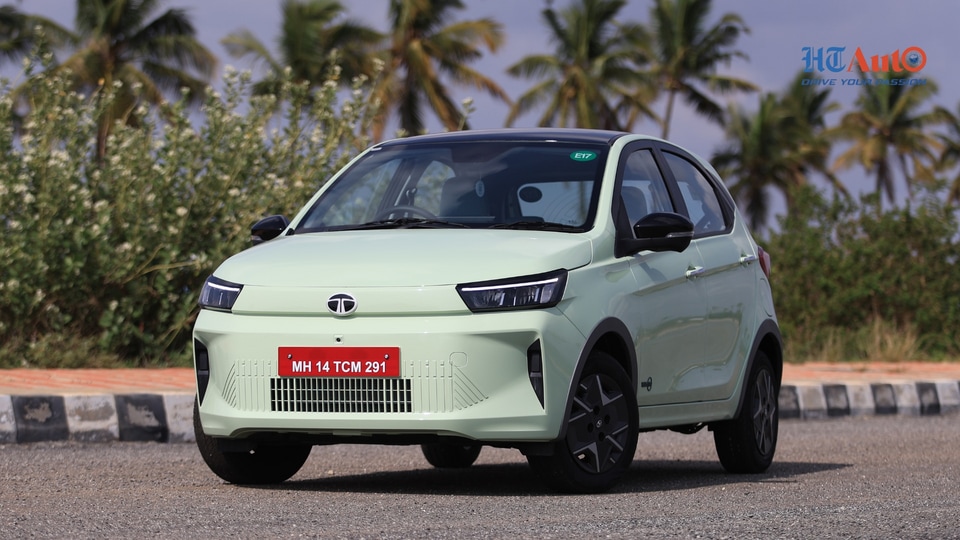
| Model | Maruti Suzuki WagonR | Maruti Suzuki WagonR flex fuel | Tata Tiago EV (24 kWh) |
| Price (ex-showroom) | ₹595,900 | ₹723,900 | ₹949,000 |
| Fuel economy/Range (Average) | 25 kmpl | 18.75 kmpl | 215 km/charge |
| Fuel price | ₹112.24/litre | ₹91.18/litre | ₹240/charge |
| Fuel cost/km | ₹4.49/km | ₹4.86/km | ₹1.12/km |
| Annual fuel cost (15,000 km) | ₹67,344 | ₹72,944 | ₹18,900 |
| 5 year fuel cost | ₹336,720 | ₹364,720 | ₹94,500 |
| Estimated maintenance cost (1 year) | ₹15,000 | ₹18,600 | ₹15,500 |
| Estimated maintenance cost (5 year) | ₹75,000 | ₹93,000 | ₹77,500 |
| Total ownership cost (5 year) | ₹10,07,620 | ₹11,81,620 | ₹11,21,000 |
The above cost analysis has been done with an annual driving distance of 15,000 km and a 5-year ownership period in consideration. The petrol car emerges as the most economical option with a total cost of ownership (TCO) of approximately ₹10.08 lakh. Its lower purchase price of ₹5.96 lakh offsets higher fuel expenses, resulting in a fuel cost of ₹4.49/km and a total fuel expenditure of about ₹3.37 lakh over five years.
The electric car has the highest upfront cost at ₹9.49 lakh but benefits from the lowest operating cost of ₹1.12/km. Five-year energy expenses for the EV are estimated at only ₹95,000, around 72% lower than a petrol model. As a result, the EV's TCO is approximately ₹11.21 lakh, lower than the flex-fuel car but still higher than the petrol model owing to its higher upfront cost.
On the other hand, the E85-compatible flex-fuel vehicle (FFV) commands the highest TCO at approximately ₹11.82 lakh. Although E85 fuel is cheaper than petrol, the lower fuel efficiency of ethanol means you have to opt for frequent refuelling, resulting in a higher running cost of ₹4.86/km and fuel expenses of around ₹3.65 lakh over five years. Combined with a higher purchase price and maintenance costs, FFVs currently face a cost disadvantage as compared to the petrol car as well as the EV.
Findings from analysis
These findings come at a time when the Indian government has made the 20% ethanol-blended petrol, commonly known as E20, the standard fuel across the country from April 2026. Not only that, but the government has also indicated that it aims to achieve a 100% ethanol fuel policy in the near future. With this aim, the government has launched E85 petrol in India, which comes with 85% ethanol, blended with 15% petrol. A few automakers across different segments have launched E85-compatible vehicles as well.
Despite sharp criticism from vehicle owners, the government has been advocating for this strategy by claiming that it can reduce dependence on crude oil imports and support India's energy security goals in the short term. However, there are certain challenges as well. The E85-fuel-compatible flex-fuel vehicles (FFVs) face scalability challenges due to lower fuel efficiency, which continues to be a major deciding factor for vehicle buyers in India. The study has stated that the E85 ecosystem in India is still nascent, with limited compatible vehicle models available. It also said that widespread adoption is expected to be gradual, potentially taking 10-15 years to achieve meaningful market penetration.
It further emphasised that while both E85 and EVs offer alternatives to petrol, electric vehicles currently appear to be the more reliable and sustainable long-term pathway for India's mobility transition. As charging infrastructure expands and battery costs continue to decline, EVs are likely to become more affordable and practical for a larger segment of consumers. The study said that while E85 may serve as a futuristic solution for improving India's energy security, EVs have a stronger potential to emerge as the more scalable and ecologically sustainable future-ready alternative for the country's vehicle market.
Get insights into Upcoming Cars In India, Electric Vehicles, Upcoming Bikes in India and cutting-edge technology transforming the automotive landscape.

Editor's Pick



Trending this Week