BS-VII emission norms from 2029: Cars, SUVs to comply first
The Government of India has proposed BS-VII emission norms from April 2029, applicable for M1 category vehicles, which are primarily the passenger vehicles including cars, SUVs.
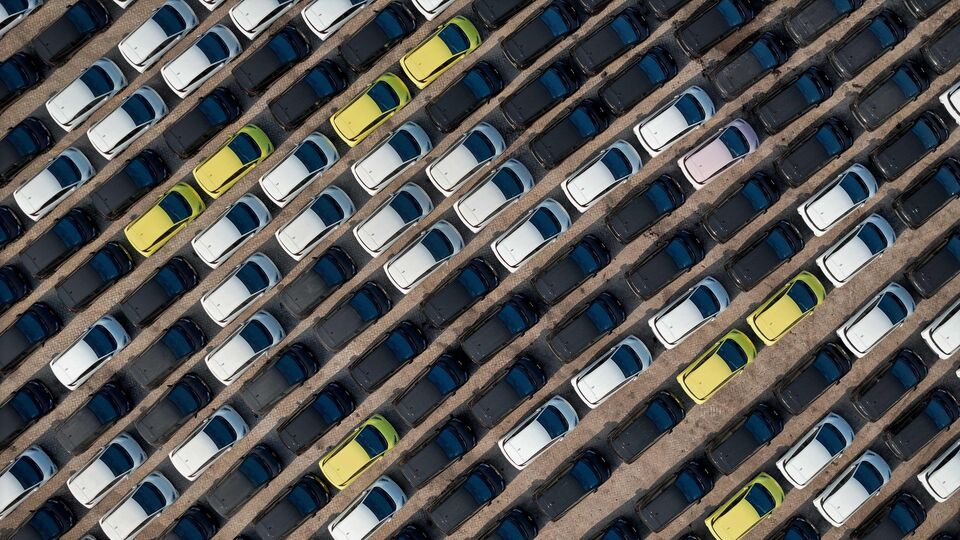
The Government of India has proposed the introduction of Bharat Stage VII (BS-VII) emission norms for passenger vehicles from April 1, 2029. This will tighten the pollution controls through new limits on exhaust emissions, real-world driving tests and battery durability requirements. According to the draft proposed by the Ministry of Road Transport and Highways (MoRTH), the new rules would apply to the category of M1 vehicles, primarily passenger vehicles, including cars and SUVs, which will be manufactured from April 2029.
The draft notification also suggests that the BS-VII emission norms will be introduced in phases, with additional requirements taking effect in April 2031 and April 2035, which will include controls on brake particle emissions, tyre abrasion and particulate emissions across different powertrain technologies. This means the rule would require manufacturers to demonstrate compliance with the new emission standard not only under laboratory conditions but also through real-world driving emissions tests and checks on vehicles already in service.
Trending Cars

The MoRTH has invited public comments for 30 days before considering the draft amendments to the Central Motor Vehicles Rules, 1989. The BS-VII will mark the major leap from current BS-VI emission standards that was introduced countrywide in April 2020, significantly tightening the vehicle emission requirements and bringing the country closer to international regulatory practices.
BS-VII emission norms: Everything you must know
The draft proposes a three-phase timeline of implementation for the BS-VII emission norms: April 2029, April 2031, and April 2035. This will give the car manufacturers two and a half years before the first limits bite. While the component and tyre suppliers face separate deadlines, and several limits under the new standards, such as tyre abrasion and some battery thresholds, are yet to be notified. Also, for the first time, electric vehicles will be under the ambit of BS norms through battery durability and brake-particle requirements, and the compliance monitoring into the vehicle itself will be pushed.
April 2029
The first phase of BS-VII norms from April 2029 would introduce BS-VII exhaust-emission limits for passenger vehicles, alongside requirements covering evaporative emissions, fuel consumption, electric energy consumption and battery durability. Real-world driving tests would measure gaseous pollutants and particle numbers, while on-board systems would monitor emissions and fuel or energy consumption. The draft policy also envisages an Environmental Vehicle Passport giving users access to information on vehicle emissions, fuel consumption and battery health.
April 2031
From April 2031, the proposed framework would introduce brake-particle emission limits and tyre-abrasion requirements. The draft rule sets a brake-particle mass limit of 3 mg/km for pure electric vehicles and 7 mg/km for other specified powertrain categories.
April 2035
Further BS-VII standard compliance requirements are scheduled for implementation from April 2035, including a common brake-particle mass limit across powertrain technologies and additional particle-number controls, subject to limits to be notified separately.
BS-VII emission norms: A comprehensive rule
The proposed BS-VII emission standards cover a wide range of powertrains and fuels, including petrol, diesel, compressed natural gas (CNG), ethanol blends, hydrogen and hybrid vehicles, as well as electric vehicles for applicable energy-consumption and battery requirements.
For M1 vehicles, the draft rule sets the carbon monoxide limit at 1,000 mg/km for petrol engines and 500 mg/km for diesel engines. Nitrogen oxides (NOx) limits have been set at 60 mg/km for petrol engines and 80 mg/km for diesel engines. Particulate limits have been proposed at 4.5 mg/km for both engine types. The limits apply across fuels, including petrol blended with 20% ethanol (E20), diesel, CNG, LPG, hydrogen, methanol, and flex-fuel and bi-fuel vehicles.
The draft also regulates non-exhaust emissions and vehicle durability. From April 1, 2031, limits on brake particle emissions (PM10) are set by powertrain. They are 3 mg/km for pure electric vehicles and 7 mg/km for hybrids, fuel-cell vehicles and internal combustion vehicles. From April 1, 2035, a single 3 mg/km limit applies to all powertrains.
Abrasion limits for C1 tyres will be applicable from April 1, 2031, with the limits to be notified separately. From April 1, 2030, type approval will include on-road emission tests using portable measurement systems, with a conformity factor of 1.0 for NOx and particle number, according to the draft.
The rule has brought the electric vehicles under the ambit of BS standards for the first time. Batteries of pure electric vehicles and plug-in hybrids must retain at least 75% performance for the first five years or 100,000 km, and 67% up to eight years or 160,000 km, whichever comes first.
The vehicles must carry an on-board diagnostics system and on-board monitoring technology able to detect emissions at least 2.5 times the limit, and on-board fuel and electric energy consumption monitoring as well. Fuel-consumption data must be accessible from April 1, 2030, and the monitoring data from April 1, 2032, including over-the-air (OTA).
Emission compliance must be maintained for 160,000 km or eight years, with an additional lifetime period of 200,000 km or 10 years.
Under the new norms, vehicle buyers would get an Environmental Vehicle Passport showing fuel consumption, battery state of health and pollutant emissions, with provision for in-vehicle display. The draft also allows petrol and diesel vehicles fitted with geofencing technology to be approved as 'BS-VII-G' vehicles. The OEMs must declare and label ethanol compatibility above E20.
Get insights into Upcoming Cars In India, Electric Vehicles, Upcoming Bikes in India and cutting-edge technology transforming the automotive landscape.
Editor's Pick



Trending this Week