Tesla's new autonomous Cybercab packs 216 bhp and 673 km of range

Tesla Cybercab comes with a FWD layout, taking energy from a 27.6 kWh battery pack.
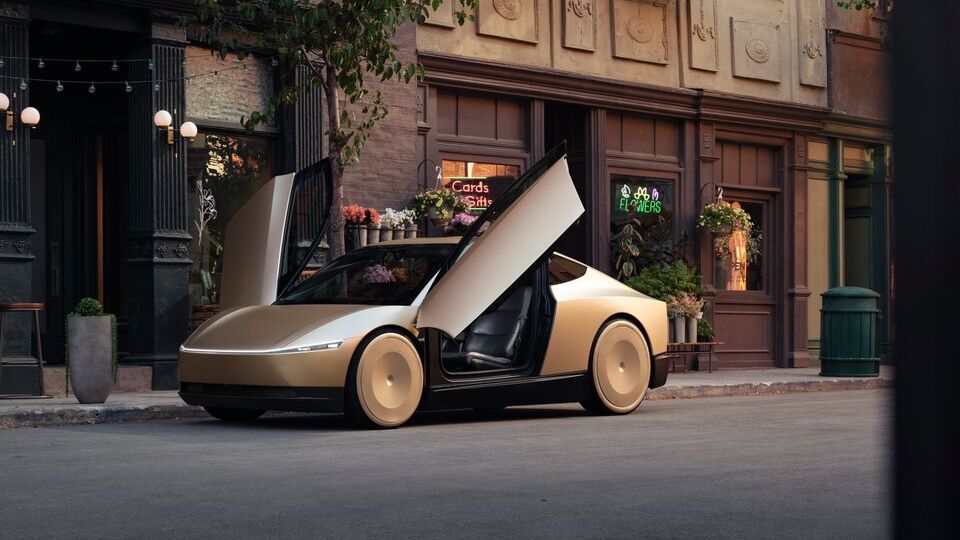


Tesla has revealed the specifications of the Cybercab, which is its purpose-built, fully autonomous twin-seater robotaxi, designed without a steering wheel or pedals. The specifications of the Tesla Cybercab have been revealed for the first time through the EPA certifications.




The pure electric robotaxi, as the EPA certification documents have revealed, will come weighing 1,412 kg. It will be powered by a front-wheel-mounted AC three-phase permanent magnet motor that is capable of churning out 216 bhp peak power. The energy for the EV will be provided by a 47.6 kWh lithium-ion battery pack. The electric robotaxi is claimed to offer a total range of up to 673 km on a single charge.
Also check these Vehicles

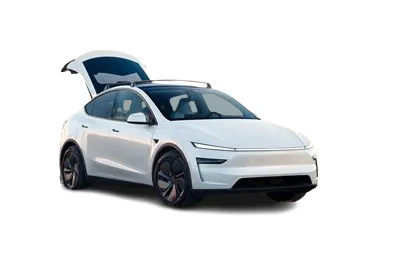

The Tesla Cybercab is currently in continuous production at the company's Giga Texas facility. While Tesla has not revealed the pricing of the Cybercab, expect it to be priced under $30,000.
Tesla Cybercab is lighter than Model 3
With a curb weight of 1,412 kg, the Tesla Cybercab is about 340 kg lighter than the Tesla Model 3 Standard Range variant, which weighs 1,751 kg. Compared to the Model 3, the Cybercab comes with fewer seats, no steering wheel, no pedals, and a battery pack that’s roughly 12 kWh smaller. However, for a twin-seater car with no driver controls, 1,412 kg is quite substantial. Even similar ICE-powered cars weigh less.
The battery itself accounts for a majority of the total weight. At 47.6 kWh, the lithium-ion battery pack weighs roughly 6308 kg. However, the remaining vehicle weight suggests Tesla didn’t go ultra-lightweight on the chassis of Cybercab. The self-driving hardware, including cameras, a computing module, and associated wiring, adds weight that a conventional car doesn’t carry.
Not meant for race, but ride-hailing
Promising a power of 216 bhp, the Tesla Cybercab is not highly powerful that could enter a race, but the output is generous enough for a vehicle meant for ride-hailing. As it appears, the engineering logic behind the Tesla Cybercab is efficiency-oriented.
The front-wheel-drive (FWD) drivetrain layout is a notable factor, since most of the Tesla cars use rear-wheel (RWD) or all-wheel drive (AWD). The FWD layout suggests Tesla optimised the Cybercab for cost, since a front motor eliminates the need for a rear subframe and driveshaft, saving weight and complexity in a vehicle that doesn’t require the performance dynamics of RWD.
Check out Upcoming EV Cars in India, Upcoming EV Bikes in India.


Editor's Pick


Trending this Week