Supreme Court approves ECC hike for commercial vehicles passing through Delhi

- The revised fees aim to reduce pollution and traffic congestion while introducing barrier-free toll systems to streamline compliance and improve air quality management in the capital.
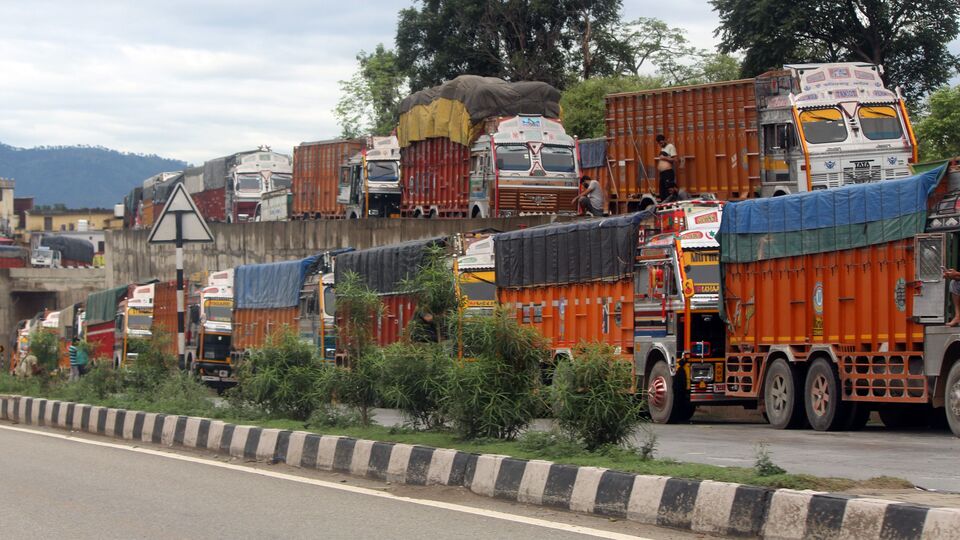
Heavy and light commercial vehicles entering Delhi will face higher Environment Compensation Charges (ECC) from April 1, following approval from the Supreme Court of India for a proposal submitted by the Commission for Air Quality Management (CAQM). The revised levy aims to reinstate the charge’s deterrent value and discourage heavy freight vehicles from using the capital city as a corridor for transit.







The bench observed that the increase was reasonable and aligned with the original purpose behind introducing the charge in 2015, which was intended to address worsening pollution levels in the capital. The court also cleared a mechanism for periodic revision, allowing ECC rates to rise by five per cent annually beginning April 1, 2027.
Trending Bikes



Under the revised structure, light commercial vehicles and two-axle trucks will pay ₹2,000 to enter the city, while three-axle trucks and vehicles with four or more axles will be charged ₹4,000. Authorities expect the higher fee to push non-destination commercial traffic towards bypass routes such as the Eastern Peripheral Expressway and Western Peripheral Expressway instead of passing through the national capital.
According to the CAQM, the ECC had remained unchanged since its introduction, even as toll rates on national highways and peripheral expressways were periodically revised. This gradually reduced the cost difference between travelling through Delhi and using the bypass corridors, making the city route financially viable for freight operators. The commission said this contributed to congestion and higher emissions of pollutants such as particulate matter and nitrogen oxides within the city.
The Environment Compensation Charge was first introduced by the Supreme Court in October 2015 as part of the long-running environmental litigation titled MC Mehta v. Union of India. The measure targeted commercial vehicles entering the capital primarily to avoid toll charges on peripheral highways, which had been identified as a significant contributor to urban pollution levels. Funds collected through the charge were intended to support public transport improvements and road infrastructure, particularly for vulnerable road users.
In its submission, the CAQM argued that inflation, rising operational costs for freight vehicles and increasing toll charges elsewhere had diluted the deterrent effect of the levy. The revised rates are intended to restore the economic incentive for trucks and other goods carriers to bypass the capital unless their destination lies within the city.
The commission has also proposed the introduction of barrier-free tolling systems at Delhi’s entry points to improve compliance and reduce congestion. Under the plan, the Municipal Corporation of Delhi will install Multi-Lane Free Flow toll collection systems integrated with RFID and Automatic Number Plate Recognition technology across all 126 border toll plazas by October 2026. These systems would allow vehicles to pass without stopping, while tolls and ECC charges are automatically recorded and deducted.
The ECC decision was delivered alongside the formal closure of the landmark public interest litigation filed by environmentalist M. C. Mehta in 1985. The Supreme Court noted that the case had remained active for nearly four decades and had produced several key directions related to vehicular emissions, industrial pollution, waste management and broader environmental governance in the capital region.
While closing the original petition, the court directed its registry to initiate fresh suo motu proceedings focused specifically on air pollution in the National Capital Region. Pending applications in the case will now be converted into separate petitions and grouped according to themes such as vehicular emissions, power plants, air quality monitoring and waste management.
The bench also instructed state governments including Delhi, Haryana, Uttar Pradesh and Rajasthan to submit compliance reports ahead of future hearings, while directing the CAQM to circulate its findings among stakeholders to enable more structured monitoring of pollution-control measures across the NCR.
Get insights into Upcoming Cars In India, Electric Vehicles, Upcoming Bikes in India and cutting-edge technology transforming the automotive landscape.


Editor's Pick




Trending this Week