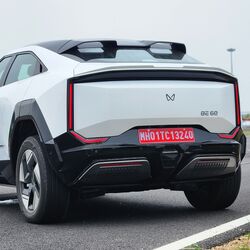
China bans flush door handles on EVs after safety concerns

- China will ban concealed door handles on electric vehicles from 2027, mandating mechanical release options on both sides of the door.



China has imposed a ban on flush door handles on electric vehicles, following a series of fatal crashes and growing concerns over passenger safety. The Ministry of Industry and Information Technology announced that all cars sold in China should be equipped with mechanical door release systems on both sides. The new regulation will take effect from January 1, 2027.






Vehicles that have already received regulatory approval and are close to market launch will be given additional time to comply, with a deadline set for January 2029.
Details of the regulation
The rules require EVs to feature mechanical door opening systems that function independently of vehicle power. Specific design requirements have also been outlined.
Also check these Cars




Exterior doors must include a recessed area measuring at least 6 cm by 2 cm to allow a hand to grasp the handle. Inside the cabin, signage indicating how to open the door must meet minimum size requirements and be placed in defined locations.
Also Read : Porsche Mulls Cutting Electric Sports Cars to Rein In Budget
Incidents behind the decision
The decision was taken after several high-profile incidents, including two fatal crashes involving Xiaomi electric vehicles. In both cases, fires broke out after impact and power failures were suspected to have prevented doors from opening, trapping the occupants inside.
China began reviewing door handle standards in July 2024 after multiple fatal EV crashes raised concerns about occupants being unable to exit vehicles during emergencies.
Impact on current EV models
Concealed door handles are widely used in China’s EV market. According to China Daily, about 60 per cent of the top 100 selling new-energy vehicles in April featured hidden handles.
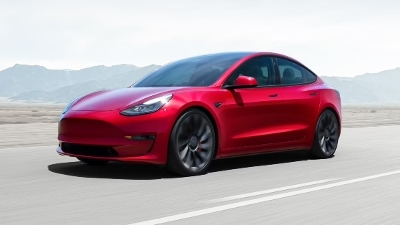
Models affected include Tesla’s Model 3 and Model Y, BMW’s China-bound iX3, and vehicles from Nio, Li Auto and Xpeng. Xiaomi’s YU7 SUV will also require design changes.
Also Read : Chinese brands take nearly 10% of Europe’s car market as EV push accelerates
Cost and engineering challenges
The cost of redesigning door systems is expected to vary. A person familiar with the design process at a Chinese EV manufacturer said changes could cost more than 100 million yuan (around $14.4 million) per model. The changes are likely to affect vehicles positioned at the higher end of the market, where concealed handles are more commonly used.
Broader regulatory implications
Although the regulation applies only to vehicles sold in China, its impact could extend beyond the domestic markets. Similar door handle designs are already under regulatory scrutiny in the United States and Europe.
Industry response
Some Chinese automakers have already adjusted designs. Models such as the Geely Galaxy M9 and BYD Seal 06 have reverted to exposed door handles.
Most foreign automakers have not yet disclosed how they plan to modify vehicles for the Chinese market. Tesla has said it will make necessary changes and is considering adjustments to manual release systems and door lock behaviour. Chinese authorities are also preparing tighter oversight of other vehicle safety areas, including acceleration performance and advanced driver-assistance systems.
Check out Upcoming EV Cars in India.


Editor's Pick




Trending this Week