This Indian city plans to shift toward a fully AI-based traffic management system

Rajasthan's capital city, Jaipur, plans to shift toward a fully AI-based traffic management system.
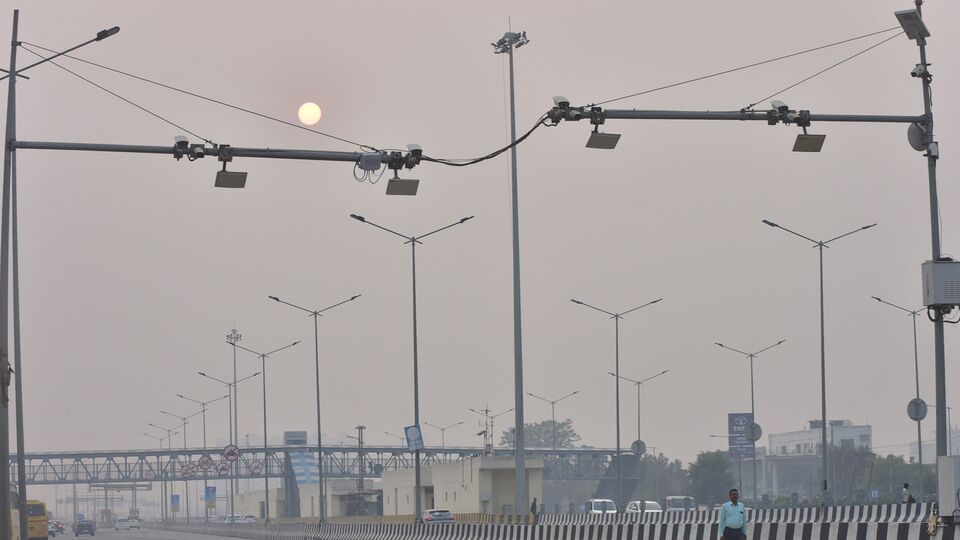
The traffic management system in Rajasthan's capital, Jaipur, will soon shift from the conventional fixed timer system to a fully artificial intelligence (AI) based mechanism, christened as Intelligent Traffic Management System (ITMS), following the successful completion of a 39-day pilot project at Rambagh Circle.







PTI has quoted officials saying that the 39-day trial of the AI-driven ITMS at Rambagh Circle achieved 100% success, which has prompted the authorities to plan to expand the system across the capital city. Under the next phase, 253 major intersections out of Jaipur's total 423 junctions will be equipped with AI-based smart cameras and integrated with the ITMS, the report stated. The pilot project at Rambagh Circle was carried out by Jaipur Traffic Police in collaboration with Data Core Infotech between June 3 and July 11.
Trending Cars





According to the report, unlike the conventional fixed-timer traffic management system, where traffic signals operate on fixed timings such as 60 or 90 seconds regardless of traffic density, the AI-based traffic management system dynamically adjusts signal timings. In the current system, signal timings remain fixed even if one road is empty and another has a long traffic jam, but the AI-based ITMS works differently. The cameras installed at intersections continuously monitor vehicle volume and queue length in real time. The system automatically increases green time on roads with higher traffic pressure and reduces it on relatively empty roads. It functions round the clock without any manual intervention. The new AI-based system claims to make Jaipur's roads congestion-free and reduce vehicular emission-led air pollution as well.
The report claims that during the trial period, more than 4.88 lakh vehicles passed through the Rambagh Circle smoothly without any manual control. With this system, the drivers experienced a direct saving of 8 to 45 seconds per lane, while the average green signal time was recorded at 33.63 seconds. The officials believe that the AI-based traffic management system will also help enforce traffic discipline.
The report also stated that during the trial period, each camera processed around 4,200 vehicles daily and automatically recorded details of about 450 traffic violations, including overspeeding, jumping red lights and wrong-side driving.
Get insights into Upcoming Cars In India, Electric Vehicles, Upcoming Bikes in India and cutting-edge technology transforming the automotive landscape.


Editor's Pick




Trending this Week