Renault Triber Turbo First Drive Review: More Power, More Capabilities

- Great performance
- Modular seating configuration
- Lack of space in third row
- Lack of boot space with third-row up

Renault Triber Turbo adds a 100 PS, 180 Nm engine, improving performance and hill-climbing ability while retaining its practical cabin, modular seating, familiar design and affordable pricing.


The MPV segment in India is on a continuous rise as people continue to look for better, more comfortable alternatives to SUVs in the current automotive market in the country. However, MPVs are known to be expensive, not only because of their size and their ability to carry seven passengers along with a little luggage, but also because they are powered by big engines that are required to make enough power and torque to carry the weight of seven people and some luggage around different terrains in India, be it straight or hilly roads. However, Renault completely shattered this norm to pieces as the Triber was launched in 2019 at a starting ex-showroom price of ₹4.95 lakh, allowing Indian customers to buy a seven-seater sub-4m MPV in under ₹5 lakh.
Also check these Cars


The affordable MPV underwent a facelift, with Renault modernising the Triber to appeal to customers across ages in the country. Earlier, it was available only with one engine option, but that was not cutting it, so Renault introduced a second engine option. The Triber has now been fitted with a turbocharged engine, and we drove it for an entire day to see what the difference was, and we were surprised by its performance.
Renault Triber Turbo: More Power, Baby!
The Renault Triber, when it was initially launched, was powered by a 1.0L three-cylinder, naturally aspirated engine producing 72 PS of peak power and 96 Nm of peak torque, paired with a five-speed manual or a five-speed AMT. The company stated that customers' feedback was that the MPV did not have enough power and that it would struggle to go uphill with all seven passengers on board. This is what they intended to solve with the introduction of the 1.0L three-cylinder turbocharged TCe100 engine producing 100 PS of peak power and 180 Nm of peak torque.
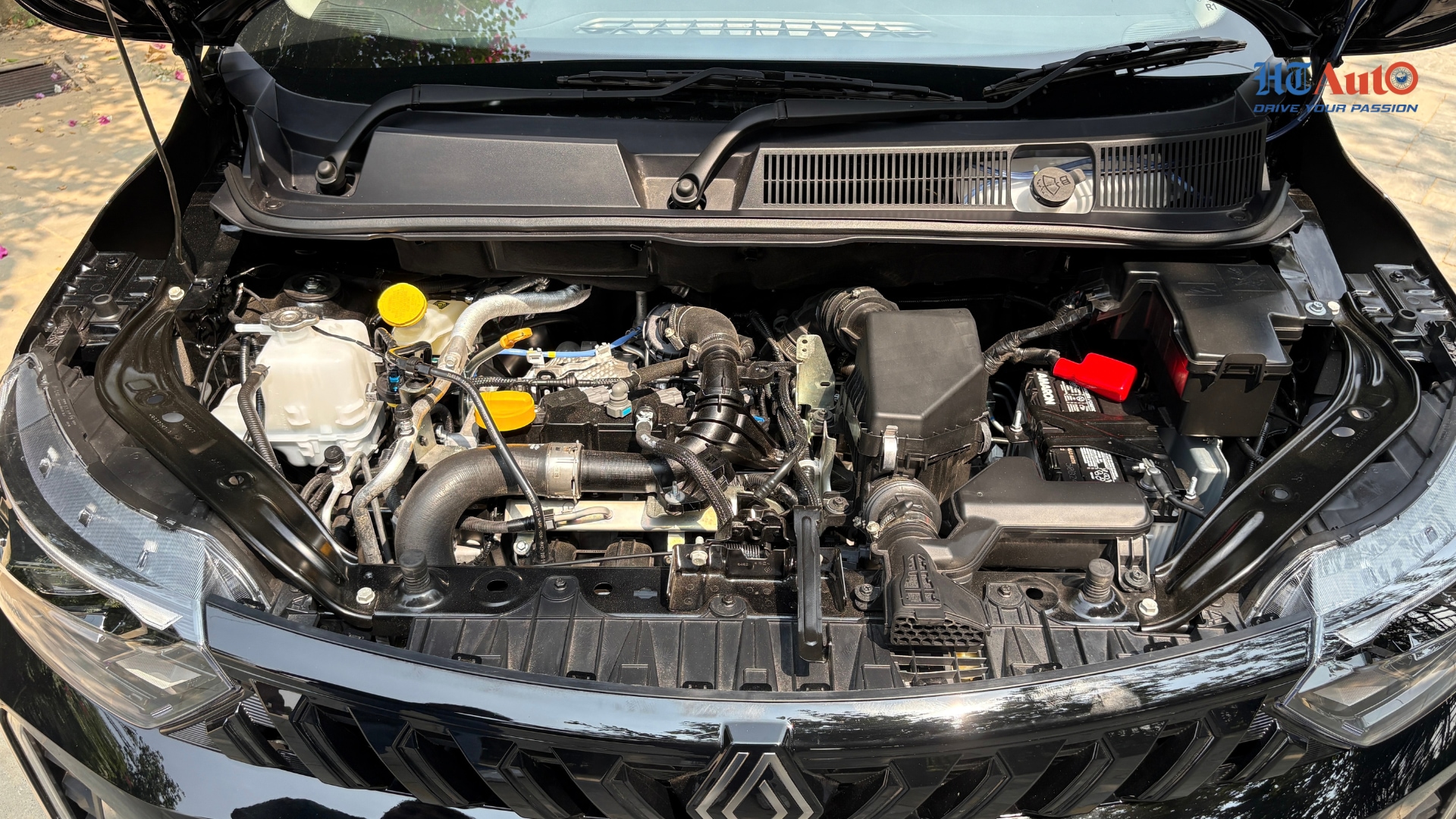
If you’re wondering whether it is the same engine that is available with the 1.0L Duster, then you are right. It is the same engine, but it boasts a new ECU called R EMS, which stands for Renault Engine Management System, providing the 14 Nm bump in torque. The engine has completely changed the driving dynamics of the MPV, as it delivers more power and more torque in the low end to improve gradeability.
Renault Triber Turbo: Interior and Exterior Unchanged!
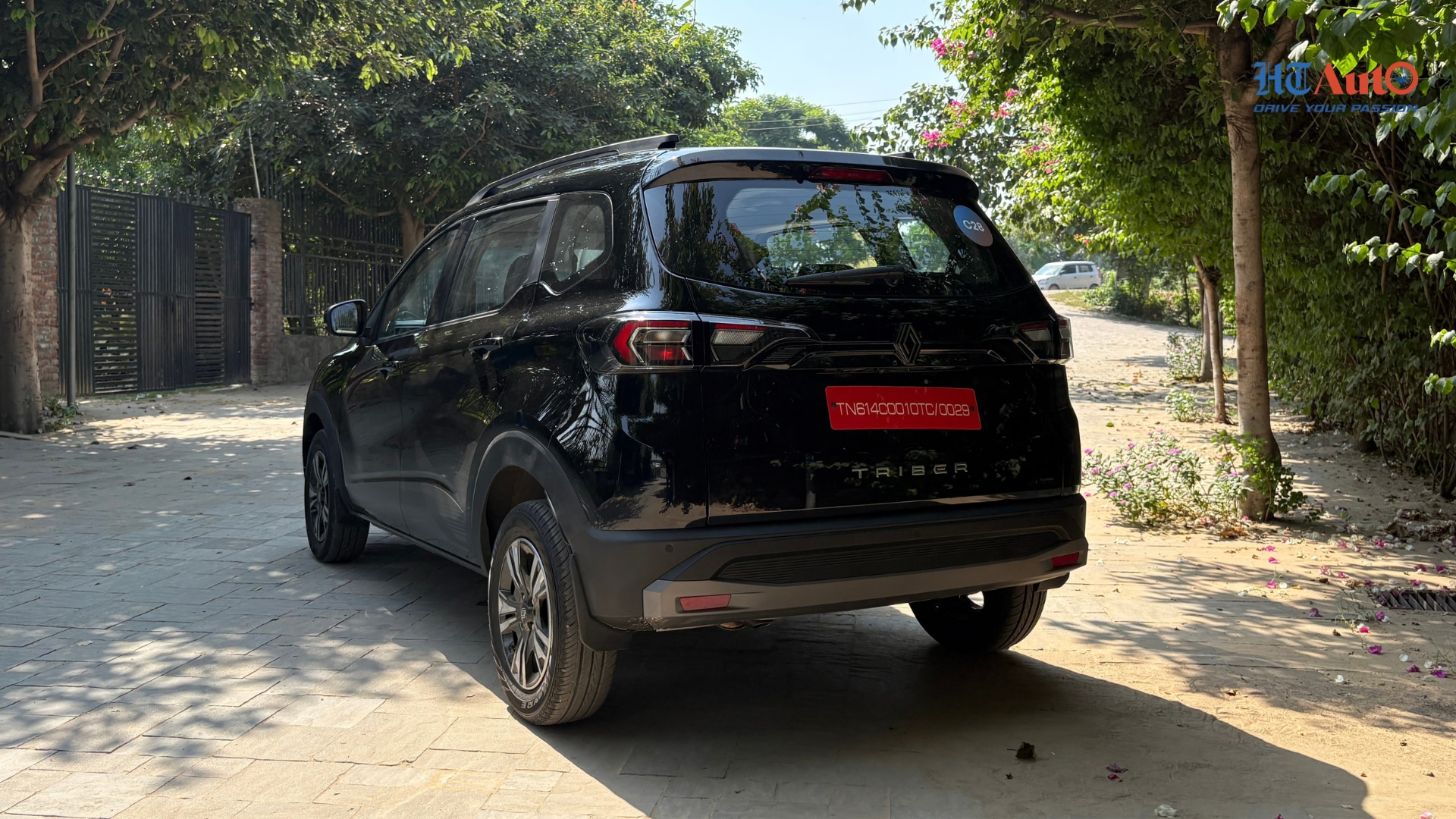
The exterior remains the same as the one with the naturally aspirated engine. There are no changes whatsoever made to this car when it comes to design language. It still gets LED headlamps, diagonal slats on the front grille, 2D Renault logo, front bumper with faux air dams and chrome garnishes, cube-shaped fog lamps, 15-inch alloys, cladding on the wheel arches, plastic cladding on the doors, roof rails, LED tail lamps at the back, a rear wiper, washer and defogger, along with a black rear bumper. However, the new addition to the Renault Triber Turbo is the turbo badge at the rear, which signifies which engine option it boasts.
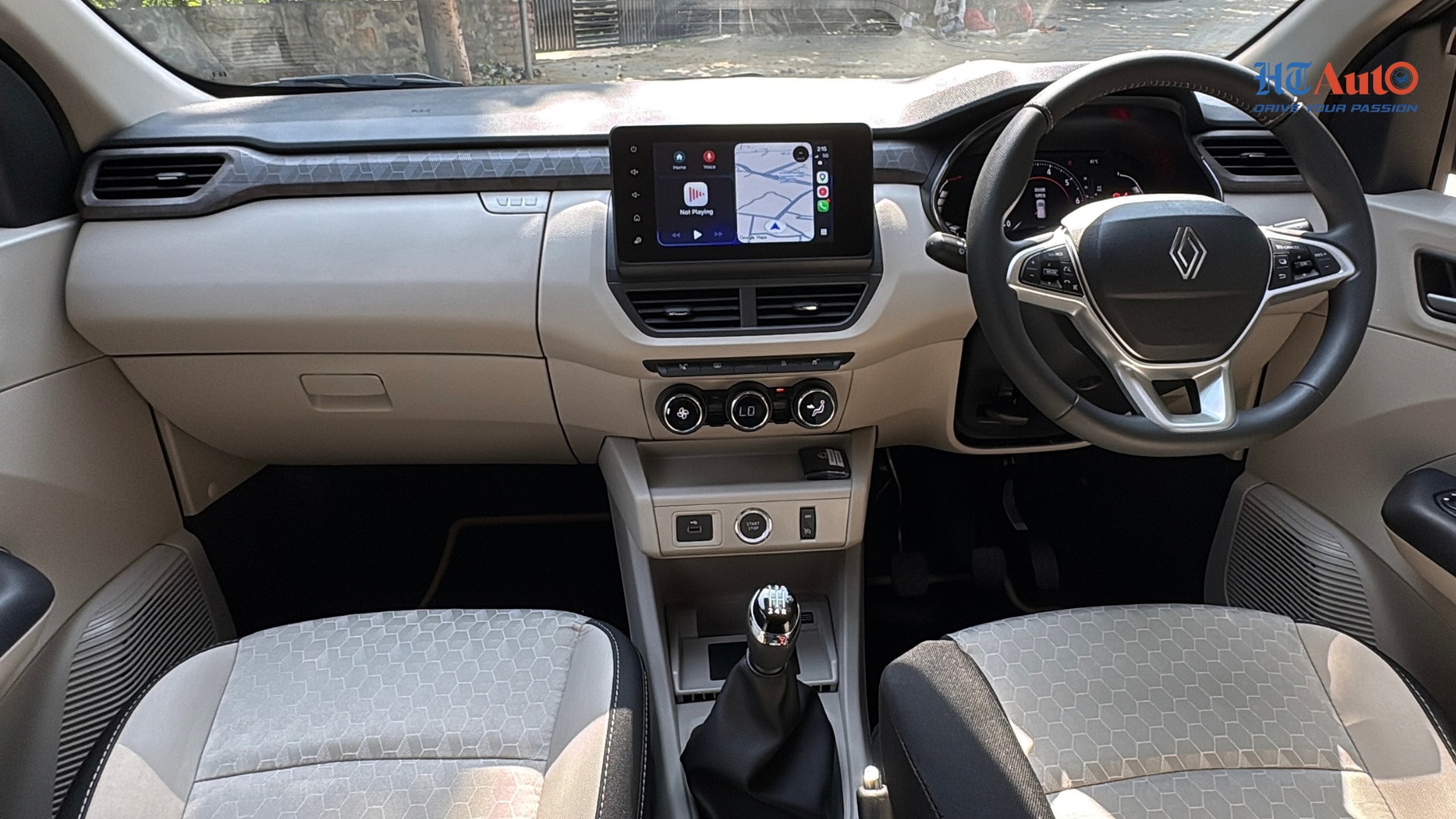
Meanwhile, the interior also remains unchanged. It still gets a dual-tone finish on the inside with black seat upholstery and a white dashboard with black elements. Additionally, it gets manual AC, a 7-inch semi-digital instrument cluster, an 8-inch digital infotainment system with wireless Android Auto and Apple CarPlay, among others. The second- and third-row passengers get a separate AC system, the controls for which can be accessed by stretching out to a rotating knob placed near the cooled storage box. The AC vents are placed vertically, allowing better airflow and faster cabin cooling.
The Renault Triber trumps any car in its budget when it comes to cabin practicality with the two glovebox compartments, plenty of storage space in the centre console, and decently-sized door bins to store 1L water bottles with relative ease, among others. The space on offer in the second row is decent as well, considering it can easily accommodate two individuals. The front seatback pockets are a boon, especially for people who like reading material on the go, or probably people who like to buy small items but often find themselves looking for a place to store them in the car. The second row of the Renault Triber Turbo, much like the one equipped with the 1.0L, gets a 60:40 split with a one-touch tumble feature, making getting in and out of the third row fairly easy.
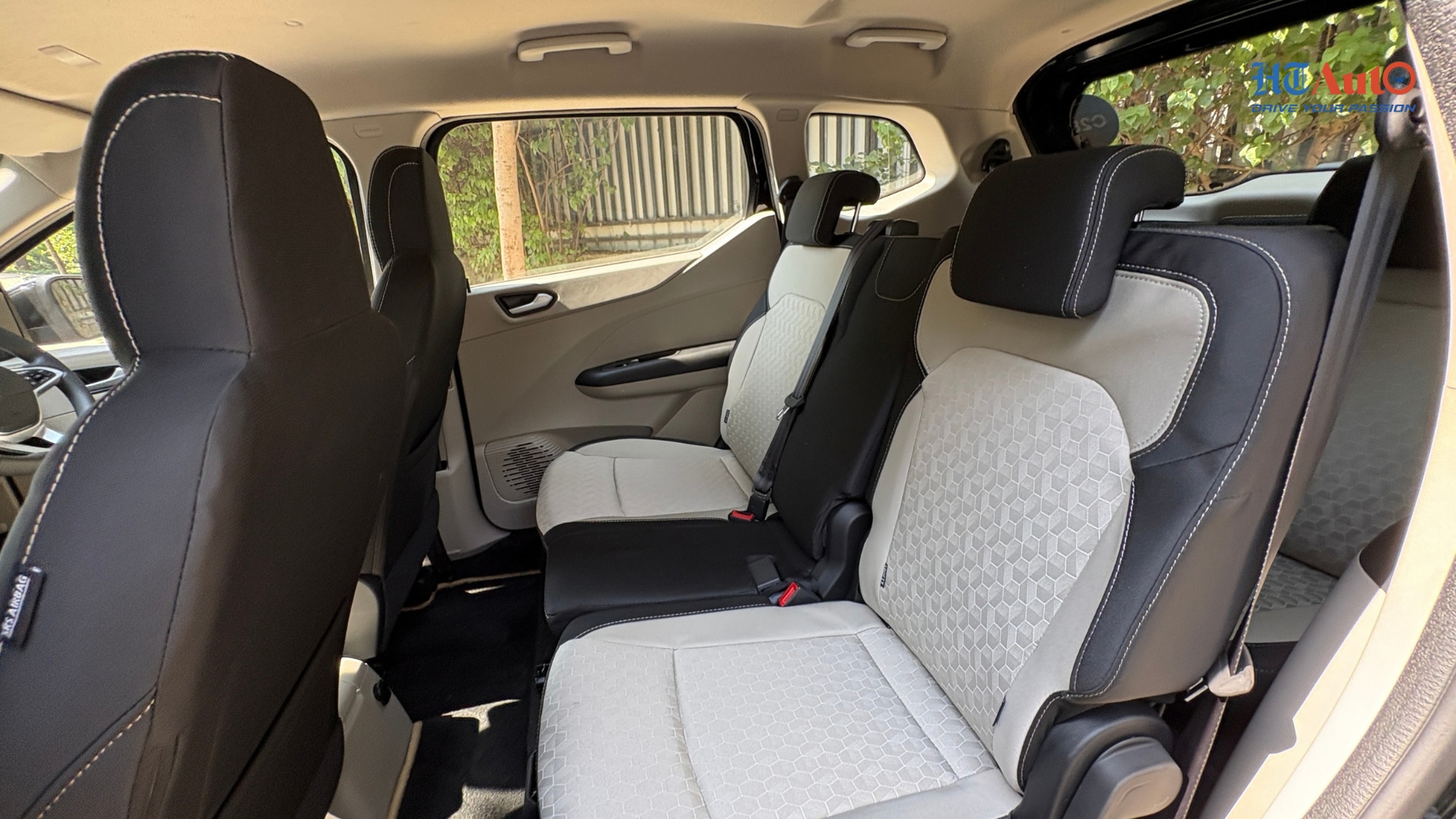
The third row, however, is a different conversation. While the second row has a slide and recline feature, the third-row passengers sit in a knees-up position with a clear lack of under-thigh support. The seats themselves aren’t as comfortable, but they can do the job. The third row also gets AC vents and a 12V charging socket, just in case the children’s devices run out of juice. However, we would recommend that average-sized adults not be seated in the third row, as it might be very difficult for them to get in and out, not to mention that their knees would get completely crushed. One of the unique things about the Renault Triber is its modularity and that the third row can be completely taken out of the car, providing passengers with over 600 litres of boot space, making it a comfortable five-seater car. However, if more space is required, the second-row seats can be folded, revealing a boot space of more than 1,000 litres.
Also Read : Renault Triber Turbo launched at ₹7.84 lakh, boasts 100 PS power
Renault Triber Turbo: Drive Review
When I first started driving the Renault Triber Turbo, it really surprised me because of the amount of power that was available as soon as I put my foot down. I have driven the naturally aspirated version, and I must say that this engine option can actually be a difference maker for the budget MPV. The NA engine, while being a capable one, underwhelms when it comes to power, as you constantly have to struggle and downshift for that surge of power to make overtakes or an uphill climb. The increased torque and power output figures make driving in the turbocharged version a breeze. We drove it in the city, on highways, as well as on twisted roads and the car really surprised me with its performance. It has no problems keeping up with traffic, and its steering wheel felt extremely light and agile, making the car feel nimble. At high speeds, the car felt planted; albeit there were a few minor vibrations, it could maintain three-digit speeds comfortably. The power surge comes in between 1,800 and 2,000 rpm, and it goes all the way to a range between 4,500 and 5,500 rpm. The low-end torque addresses the power issue as well as pulling power with seven passengers and their luggage on board on uphill climbs or a road trip to the hills. We were pretty surprised by the performance of the car, even though there were just two people in the car. The company claims that the Renault Triber Turbo goes from 0 to 100 kmph in 10.8 seconds, and we put it to the test, and we got to 100 kmph in approximately 12 seconds.
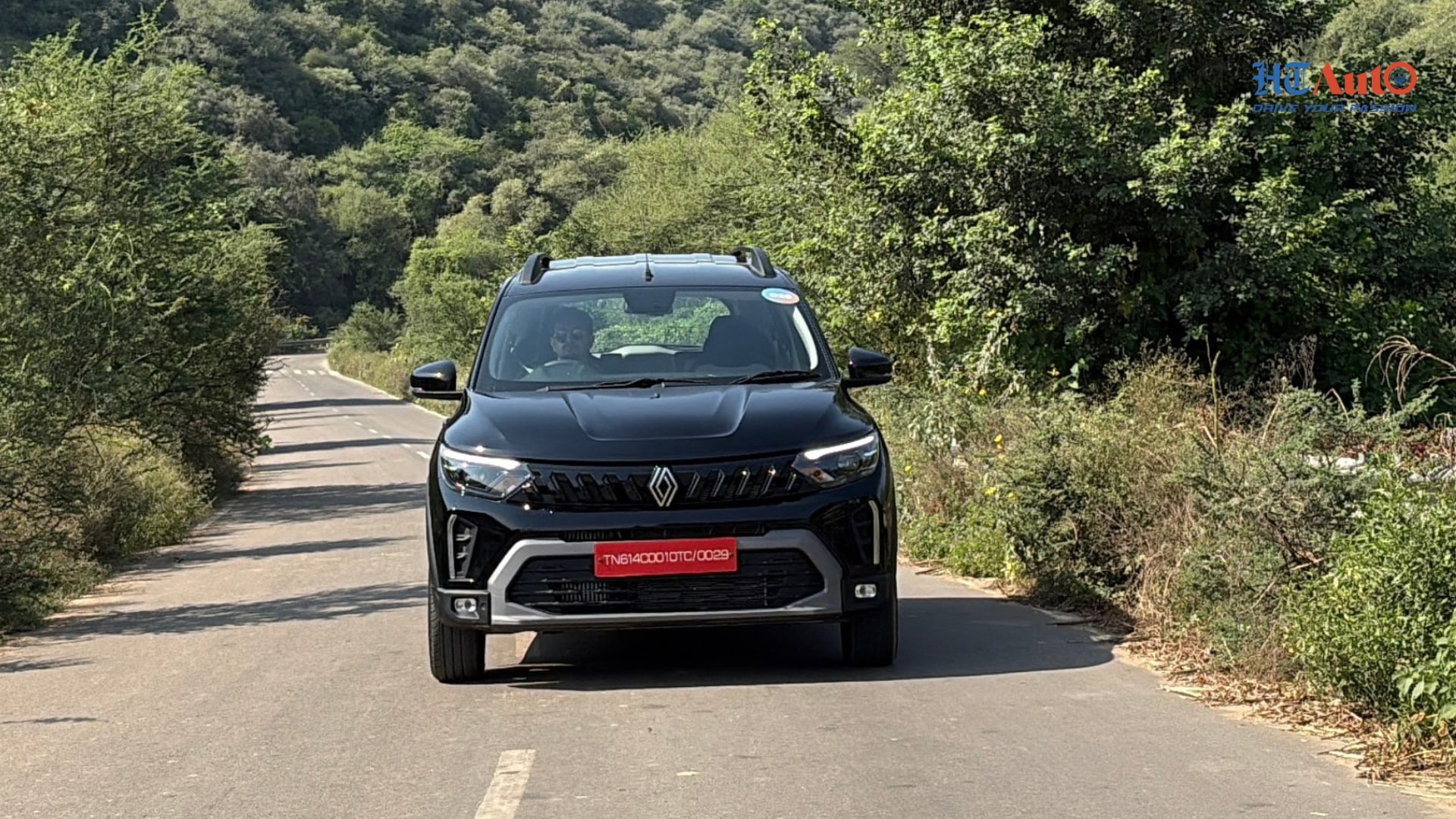
Not only that, but the company has revised a few more things with the Triber Turbo. First, it gets a new thermal management system with a BLDC fan cooling system, which offers 35% higher air intake, technology commonly used in EVs and PHEVs. Second, the Triber Turbo gets two anti-roll bars, one in the front and the other in the rear. Apart from that, it gets an offset spring design with advanced valve technology and optimised damper tuning, reducing body roll despite the weight increase. We drove it on some twisty and winding roads, and the Triber Turbo honestly left us speechless. We were driving it around 40-80 kmph, and it took corners well without throwing us around in the cabin. The brakes could have been a little better for those enthusiastic drivers. However, the company has also focused on fuel economy and has fitted the Triber Turbo with low-drag callipers, with the budget MPV boasting a fuel economy figure of 21 kmpl. Our meter reading was close to 15-16 kmpl, which suggests that the car just might be able to do 21 kmpl since we drove it on the twisties as well as highways.
Renault Triber Turbo: Conclusion
The Renault Triber Turbo, in my opinion, is a great deal, especially since the company has resolved the qualms that customers had with the 1.0L NA petrol engine. Not only that, but if this is your daily driver and you are an enthusiast, it would not disappoint you. It remains a great budget buy with a starting ex-showroom price of ₹7.84 lakh. Currently, it is only available with a five-speed manual, but the company has stated that an AMT as well as a CNG version would be coming out soon, offering customers more variety. The top-of-the-line variant with the 5-speed MT costs less than ₹9 lakh, making it a great budget buy.


Editor's Pick


Trending this Week