Check out 5 reasons why the BYD Atto 3 has gained traction globally

- The BYD Atto 3's global success stems from strong domestic sales, wide export reach, competitive range options, tiered features, and market-specific pricing strategies.
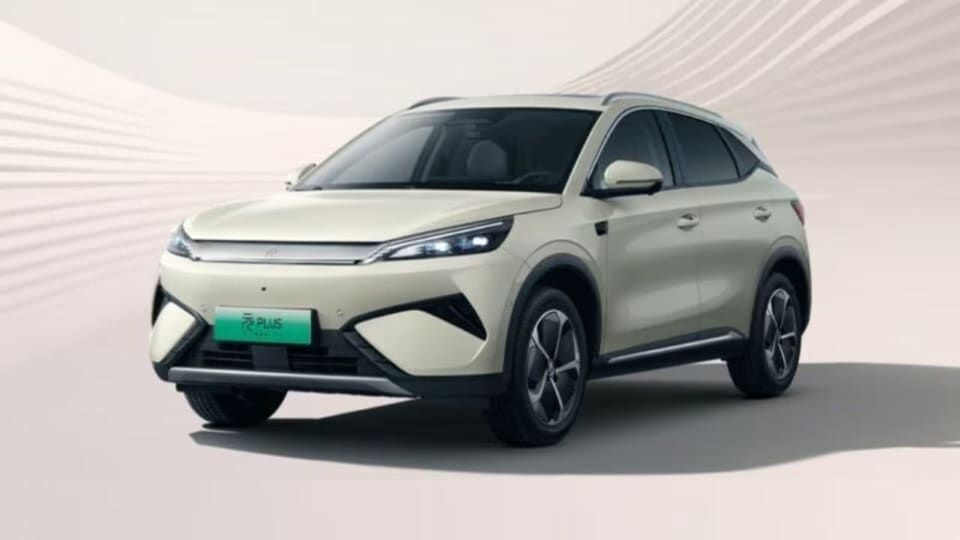
The BYD Atto 3, also known as the Yuan Plus in its home market of China, has achieved a significant milestone by surpassing one million units in global sales. Launched in February 2022, the electric SUV reached this figure in just under 31 months, an impressive feat for a relatively new global product. But beyond the sales numbers lies a story of smart market strategy, feature-rich offerings, and growing global appetite for electric mobility. The BYD Atto 3’s global success can be attributed to a mix of early domestic traction, calculated export expansion, modern technical capabilities and a feature set that appeals to a broad audience.
Whether the Atto 3 can sustain its momentum long term may depend on how BYD adapts its pricing and localisation strategies going forward. Here's a deeper look at five key reasons behind its popularity.
The Atto 3’s rapid rise began in China, a market that has become the global epicentre for EV adoption. In its first 14 months on sale, BYD managed to sell around 300,000 units domestically, a strong figure that underlined the vehicle’s acceptance in a highly competitive space. Another 200,000 units were sold in the following six months. With these numbers, the Atto 3 proved it could appeal to a wide customer base at home before expanding abroad, a factor that likely gave BYD the confidence to scale production and exports.
After gaining momentum in China, BYD focused on building a strong export pipeline. Within two years of launch, the Atto 3 was available in over 100 countries, helping it cross the one-million mark globally. The final half of those million units were sold primarily outside China over a span of 25 months. While BYD has not released a region-wise breakdown of its sales, the model’s widespread availability suggests it has been able to cater to varied market needs, from Europe and Southeast Asia to Australia, including India. Its consistent daily average of 719 units sold globally highlights the breadth of its reach, even if not evenly distributed.
The Atto 3 is offered with two battery pack choices, including a 49.92 kWh unit and a larger 60.48 kWh pack. The smaller battery offers a claimed range of up to 468 km, while the bigger one stretches that to 521 km under test conditions. Though real-world figures can vary depending on terrain, climate, and driving habits, the numbers are competitive for the segment and have likely played a role in attracting buyers looking for a reasonably long-range EV without stepping into luxury price territory. The use of LFP (lithium iron phosphate) chemistry, known for better thermal stability and lifespan, also adds a layer of durability for long-term use.
In markets like India, BYD has introduced the Atto 3 in three trims: Dynamic, Premium, and Superior. While the base Dynamic trim omits some advanced features, it still includes essentials like seven airbags, a 360-degree camera system, and a panoramic sunroof, safety and comfort features that are not always standard at this price point in EVs. The higher trims fill in the gaps with extras such as Level 2 ADAS, adaptive headlights, and an eight-speaker audio system. This layered approach allows customers to choose based on their needs and budgets rather than forcing all buyers into a single, expensive variant.
Also check these Cars
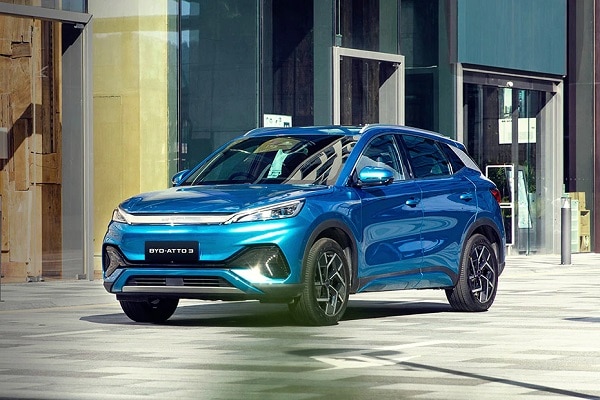


The Atto 3 isn’t priced uniformly around the world. In China, it starts at approximately ¥115,800 (about ₹13.97 lakh), which positions it competitively against other mainstream EVs. However, in markets like India, the pricing begins at ₹24.99 lakh and goes up to ₹33.99 lakh (ex-showroom). That’s nearly double the Chinese starting price and positions it above many mainstream electric SUVs in India. While this higher pricing may limit mass appeal, BYD appears to target customers looking for a premium and relatively unique EV experience rather than pursuing aggressive volume in every region. That said, the lack of local production in some countries, including India, adds to the cost, something that could impact long-term competitiveness if not addressed.
Check out Upcoming EV Cars in India.


Editor's Pick




Trending this Week