“Given a choice, gig workers would choose battery swapping over fixed batteries”: Pulkit Khurana, Battery Smart

- As India marks World EV Day, HT Auto speaks exclusively with Battery Smart Co-Founder and CEO Pulkit Khurana about the infrastructure challenges shaping commercial EV adoption, battery swapping, driver behaviour and why he believes swapping is already the preferred choice for many users.
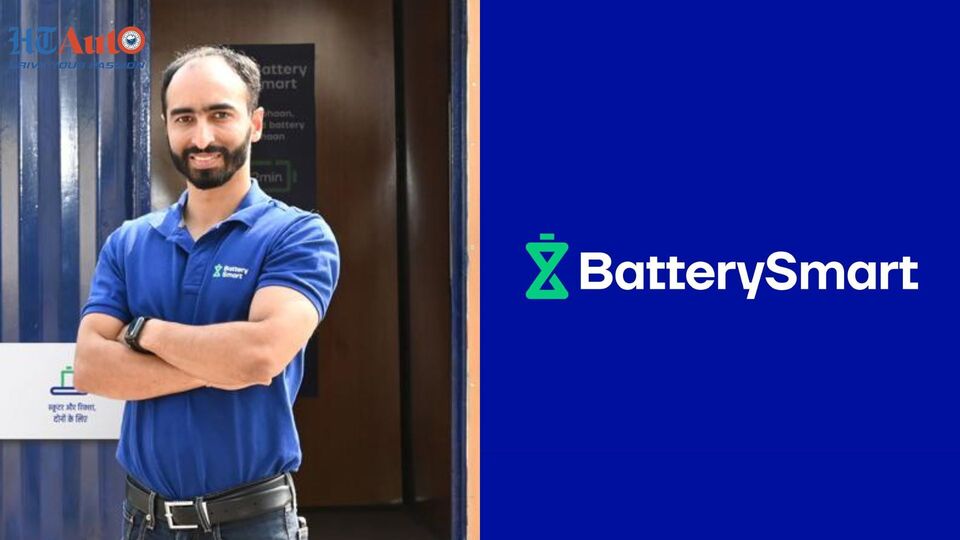
As India marks World EV Day, the conversation around electric mobility is gradually moving beyond vehicle launches and sales numbers towards a more fundamental question: is the infrastructure ready to support electric vehicles at scale?




For commercial EV users, that question becomes even more important. A delivery rider, e-rickshaw driver or last-mile mobility operator cannot afford to have their vehicle sitting idle for hours. Downtime directly translates into lost income, while the upfront cost of an EV and concerns around battery life continue to remain important considerations.
Trending Cars


Battery Smart has been working to address these challenges through its Battery-as-a-Service model. Founded in 2019 by IIT Kanpur batchmates Pulkit Khurana and Siddharth Sikka, the company built its business around eliminating battery ownership for commercial electric two and three-wheeler users. Its network now spans more than 90 cities, with over 1,500 battery-swapping stations serving more than one lakh EV drivers.
On World EV Day, HT Auto spoke exclusively with Pulkit Khurana, Co-Founder and CEO of Battery Smart, about what led to the company's creation, why battery swapping makes more sense for some EV users than others, the question of battery standardisation, what millions of real-world swaps reveal about commercial EV usage, and what it will take for swapping to become a bigger part of India's electric mobility ecosystem.
Q: When Battery Smart started, what was the one problem with EV adoption that you felt the industry was not paying enough attention to? And has that problem changed today?
Pulkit Khurana: We registered this company towards the end of 2019, just prior to the COVID era. At that point, there was a lot of reluctance even to entertain the thought that EVs were going to go mainstream. Most people we talked to would say, “whether EVs will happen or not," unlike today.
Surprisingly, at least in North India, Delhi, UP, etc., there were already 10 lakh+ electric rickshaws on the road, and no one was talking about it. We realised this was already happening. It might not have been mainstream, but in Tier-2 cities and for last-mile mobility, even in Delhi, a lot of drivers were adopting these e-rickshaws.
We started researching that market and realised almost all of them were running on lead-acid batteries. A lot of them weren’t even registered. These were small OEMs bringing in kits from China and assembling, or local manufacturers assembling a pack, importing motors and controllers, and putting a lead-acid battery around it.
We spent a few months travelling to different cities and talking to these drivers just to understand their economics better. We realised they were facing two challenges. The lead-acid batteries weren’t actually made for EVs, so they came with their own host of problems, basically requiring 10–12 hours of charging every night. They would go to unofficial charging points, charge overnight, try to top up during the day, and every 6–8 months they had to buy a new set of batteries and discard the old one.
Most of these drivers had a lot of potential to earn, but they were unable to do so because of these two problems. It was very difficult for them to do this recurring CapEx of ₹20–30,000 every few months, and they didn’t have access to charging infrastructure. Even if they did, their uptime was capped; they could only run 60–70 km irrespective of how much they wanted.
This is when we realised that if we could fundamentally solve this problem for this cohort of drivers, we could create a solution that could scale to other form factors and, as and when EVs happened, fast-track the adoption of electric vehicles in India.
That’s how we started. At that point, e-rickshaws weren’t even talked about or considered a large or important form factor for the country, but they have penetrated very heavily across North India since then. Two-wheelers were yet to come and become mainstream, which is now happening, and you see most of the big players, at least in commercial applications, choosing an EV over a petrol vehicle given the economics are much more favourable now.
The problems still remain the same: downtime is still a problem, higher CapEx and recurring CapEx is still a problem, real estate/degraded infrastructure is still a problem. But at least the economics are more attractive, more products are available, and adoption is rapidly increasing.
Q: Battery swapping has been around as an idea for a while, but it hasn't scaled uniformly across every EV segment. Where do you think swapping genuinely works today, and where does it still struggle to make sense?
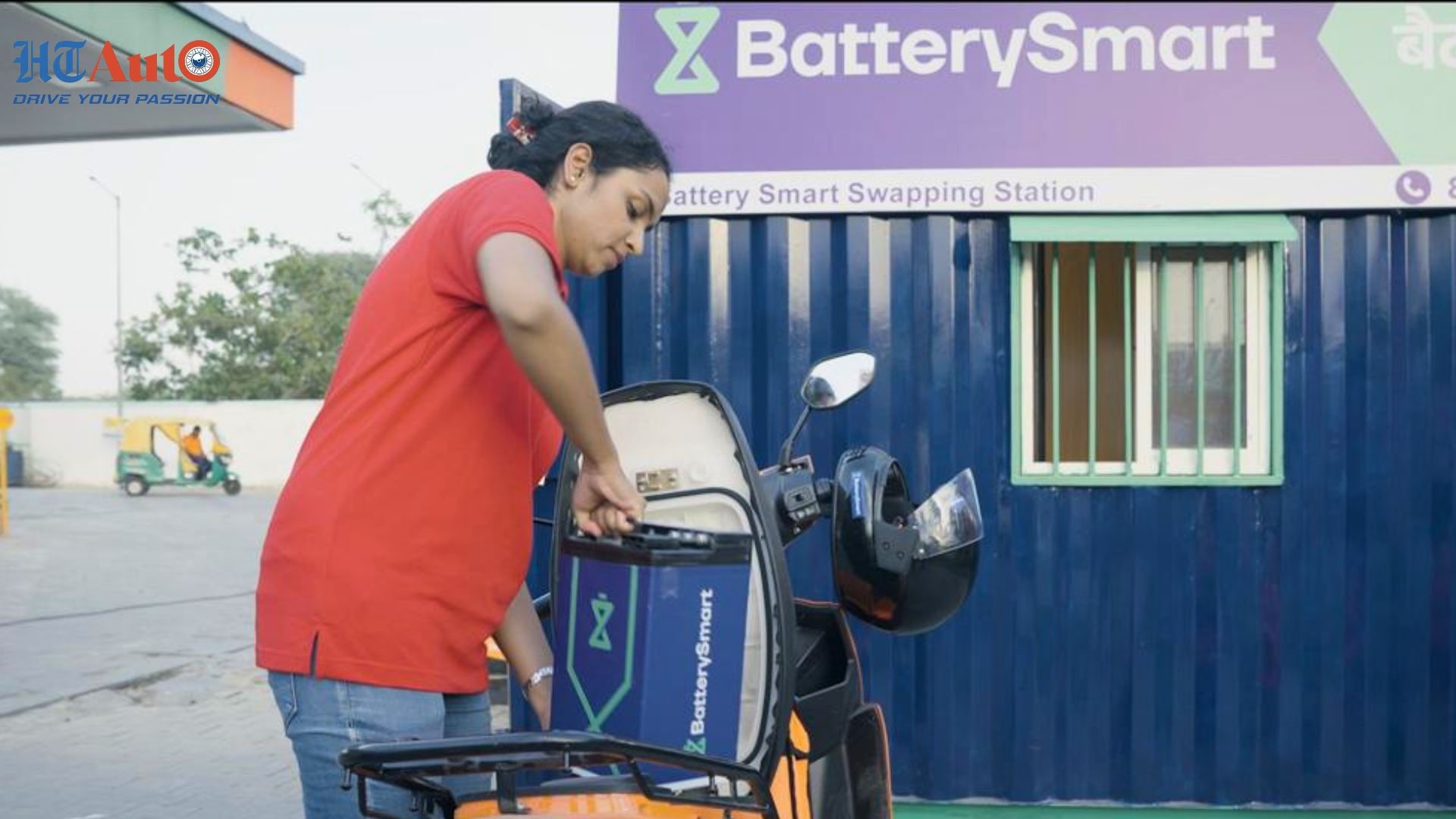
Pulkit Khurana: Swapping isn’t a golden bullet that is really applicable to all kinds of use cases or form factors, to be very honest. If we look at different use cases, for example, someone buying an Ather or a TVS iQube and using it to go from home to office, running 10–20 km a day, they don’t really need a very quick battery-swapping solution. Their battery is sufficient for a whole week’s run if they charge it on the weekend. They might have a home where they can easily charge overnight, and they can afford the vehicle easily.
But when you flip that to a gig worker riding for Blinkit or Zepto, someone who can’t afford a ₹1–1.5 lakh scooter, someone who doesn’t have a home with access to charging, someone who doesn’t have 2–3 hours to charge during the day because those three hours mean lost income, swapping becomes a far superior solution for those people.
The way we look at it is: in the light commercial segments, both two-wheelers and three-wheelers, food commerce, quick commerce, e-commerce, bike taxis, last-mile solutions- anywhere uptime is crucial and the ability to do large and recurring CapEx is a challenge, that is where swapping is a much superior solution to any kind of charging. However, for all low-utilisation use cases and all heavy vehicles, where, as of today, swapping isn’t commercially viable, and the density of vehicles is also low, charging is a much better option.
Q: A driver using an EV to earn a living looks at the vehicle very differently from a private buyer. What have you learned about commercial EV users that perhaps isn't visible when we only look at EV sales numbers?
Pulkit Khurana: These are very different personas of users. When we look at personal purchases in EVs, whether cars or scooters, people are optimising for the brand, looks, after-sales, financing options- everything they would for any kind of vehicle. Because overall cost is now at par with an ICE vehicle and running cost is lower, as long as people have access to charging infrastructure, they are choosing to buy more and more electric vehicles.
But when it comes to commercial, the decision framework is very different. First of all, most of these gig workers don’t have access to finance. They are extremely price-conscious and not brand-conscious, so they look at lowering their upfront cost as much as possible. They also look at maximising their uptime as much as possible because their livelihoods depend on it.
So their choice is: let’s say I am a gig worker; even if I might like a good scooter, I can’t afford it because it costs north of ₹1 lakh and I don’t have that much capital. Secondly, whatever scooter I can get my hands on, I will take it because I want to start earning as soon as possible. And once I do that, I want to be on a solution where I have minimum downtime, and that is why swapping becomes the only possible solution for that gig rider on an electric two-wheeler.
The choices are very different in terms of those frameworks, and also in terms of economics. Someone buying a private vehicle isn’t really looking at optimising at that level the way a gig worker or three-wheeler driver is trying to do.
Q: There is still a debate around battery standardisation in India. Can the swapping industry grow with different companies running their own ecosystems, or does the category eventually need common standards?
Pulkit Khurana: It is very different when we compare charging standards and the use of multiple apps for the charging network to batteries, and I’ll tell you why. When you are charging your car on a highway, you are essentially consuming energy. Think of it as very similar to petrol. You can fill it anywhere; BPCL, HPCL or IOC doesn’t matter. Similarly, you are getting the same electricity everywhere, whether it’s company A’s charger or B’s charger. Today they might be different apps; tomorrow the apps might become interoperable so you can use one app and discover any other company’s station, which has already started to happen to a certain extent.
But when it comes to batteries, there’s a physical asset involved. So despite standardisation, let’s assume standardisation would exist, the physical asset can’t be exchanged across two different networks. There is no analogy of that happening across the world.
To give you an example: the gas cylinders we use at home might be very standardised, but if you are on BPCL, you can only exchange it against BPCL and not against IOC. The same analogy applies here. Two networks are not incentivised to let their assets go to a competitor or get exchanged across the network; it becomes hard to control those assets.
At the same time, every network has an incentive to standardise as much as possible within its own network. For example, we have one kind of battery across our network, and we serve hundreds of brands. Think of it like a fuel choice you make when buying the vehicle. If you choose to buy a petrol car or a CNG car, you have made that choice, and now across all CNG stations you can fill it. Similarly, if you choose battery-swapping company A or B, you have made that choice, and then you stick with that network.
We don’t believe standardisation across networks will help in any way to fast-track adoption, but every network will be very standardised within its own user base. You wouldn’t want to have multiple kinds of batteries across your own network.
Q: Battery Smart has now seen millions of real-world swaps. What does that data tell you about how people actually use electric vehicles, and has anything surprised you?
Pulkit Khurana: Sure. We were fascinated to see that these drivers are trying to drive as much as 14–16 hours a day. They are sometimes able to drive more than 150–160 km even in dense cities. The common pattern is that these people want to maximise the utilisation of their vehicle because that is directly linked to their earnings; the more they drive, the more money they make.
What we have also seen, interestingly, is that once a user has access to a dense network like ours, they are able to go further distances and swap across the network for longer distances. I’ll give you a very interesting, one-off story. There’s this festival called Kanwar Yatra in North India where people go to Haridwar. We saw e-rickshaw drivers travelling from Delhi to Haridwar and coming back, swapping at our different stations in Ghaziabad, Modinagar, Meerut, Muzaffarnagar and so on, keeping swapping batteries in different cities, going to Haridwar and coming back.
We were really surprised because these vehicles typically operate in a 5–10 km radius at most. We got all kinds of alarms that this battery was travelling this way, and when we reached out to the driver, we were fascinated to see that there is an inter-city possibility as well once a large, stitched network exists.
Q: A lot of EV infrastructure is built on the assumption that users can plan their charging. But commercial mobility doesn't always work that way. How do you build infrastructure around unpredictable, high-utilisation users?
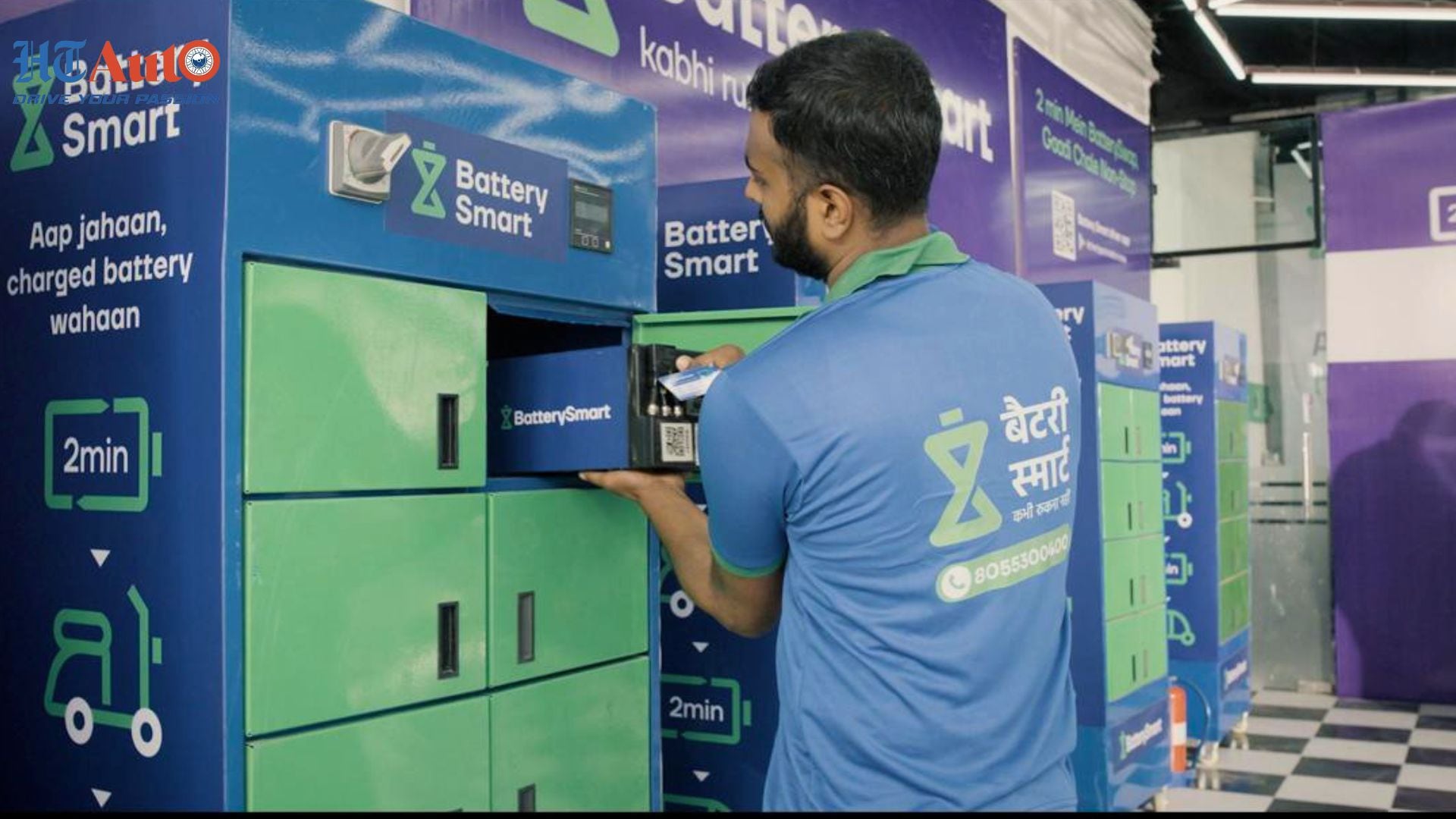
Pulkit Khurana: The one insight we had when we started was that for such highly unpredictable routes, especially commercial, it is important to give very high density. What we try to do in the cities we operate is maintain under 1 km² density, which means wherever you are standing, within one kilometre you should find a charged pack available. When we do that, it completely eliminates any kind of range anxiety. Even if you are at the last percentage point of your battery, you know within one kilometre you can just look up on the app and find a charged battery available.
The second thing, especially for the use cases we are serving, is that they are all hyper-local. A gig worker typically goes to one or two dark stores and operates in a 5–7 km radius. That means we can open a city in 5 km clusters.
For example, if we were to do Bangalore, we don’t need to do the entire Bangalore as a network on day one and then start onboarding demand. We can pick one location, say Whitefield, cover every square kilometre of that, and start from there. That is the playbook we have been using when we go to a large city: start with one hyper-local cluster and then replicate it in different pockets.
When we did Delhi for the first year, we operated just West Delhi. We were at 30+ stations in West Delhi, giving very high density, and then we replicated that playbook in North, East, and eventually covered the entire city.
Q: If we look five years ahead, what would have to change for battery swapping to move from being an alternative solution to becoming a mainstream part of India's EV ecosystem?
Pulkit Khurana: First of all, I believe that in the segments we operate in, two-wheeler and three-wheeler commercial, battery swapping is already the primary choice of the customer rather than an alternative solution. If you talk to any gig worker, given a choice, they would choose battery swapping over a fixed-charging or fixed-battery product.
But it is the limitation of infrastructure that forces some people to choose the other. For example, we are not in Chennai today. If you are a driver in Chennai, you don’t have the option because there are no swapping networks out there. But if you want to buy an EV, you will end up buying something with a fixed battery.
So I don’t see it as an alternative solution. Demand for us has always been more than what we can serve. The limitation has been how fast we can roll out the infrastructure and how many batteries we can deploy on the network. Things that can change, which will further boost this, are twofold.
Battery swapping has not been on a level playing field when it comes to certain policies. Every gig worker ends up paying more than ₹1,000 in GST because battery swapping is charged at 18% GST, while if someone were to buy an EV, it would be at 5% GST. It’s not a level playing field in terms of taxation; it was kind of an oversight because battery swapping wasn’t considered something important when the policies were being changed for EVs It wasn’t anticipated. If that changes, it would further boost adoption.
Secondly, more structural capital needs to flow into battery-swapping solutions. This is asset-heavy infrastructure; you need to deploy a billion dollars to be able to serve all these gig workers who are going to go electric in the next five years. As more and more capital gets invested into this space, you will see it naturally evolve as a more mainstream solution in these two categories.
Get insights into Upcoming Cars In India, Electric Vehicles, Upcoming Bikes in India and cutting-edge technology transforming the automotive landscape.


Editor's Pick




Trending this Week