2025 Renault Kiger track review: A rethink on performance, with fun at its core
- Peppy engine
- Agile chassis
- Practical
- Questionable quality at places
- Low NVH level

The 2025 Renault Kiger facelift brings bolder design, spruced-up cabin and a light, agile turbo engine. We put it through slalom runs, hill climbs and high-speed bankings at ICAT to test Renault’s ‘rethink performance’ claim. Here’s how it fared.


Renault India is at it again. This time, the French carmaker has decided it needs to rethink everything it does here. Not reinvent, not relaunch, but rethink. It’s all part of the company’s new “Renault India 2.0" strategy, neatly branded as ‘Renault.Rethink’. Clever marketing, but what does it actually mean for cars you and I can buy?
So far, two products have been shown the rethink wand. The Renault Triber, which is now about ‘rethink.space', a sub-4m MPV that promises to squeeze more practicality out of every millimetre. And then there’s the 2025 Renault Kiger, which Renault says is about ‘rethink.performance’. Performance and SUVs rarely share the same sentence, let alone the sub compact SUV segment. This is the segment where most cars aim to be family-friendly, feature-loaded and frugal.
Also check these Vehicles





But Renault insists its Kiger is different. Which is why, instead of a predictable city test drive, it put us behind the wheel at the ICAT test track in Manesar, home to slaloms, high-speed bankings, hill climbs and braking pads. This is usually where cars are homologated, benchmarked, and tortured in controlled conditions. It’s not a place carmakers typically invite journalists. Renault did, because it wanted one thing proven: the Kiger is fun.
Also Read : 2025 Renault Kiger launched at ₹6.29 lakh, gets refreshed design and more
2025 Renault Kiger: Design
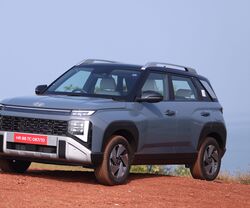
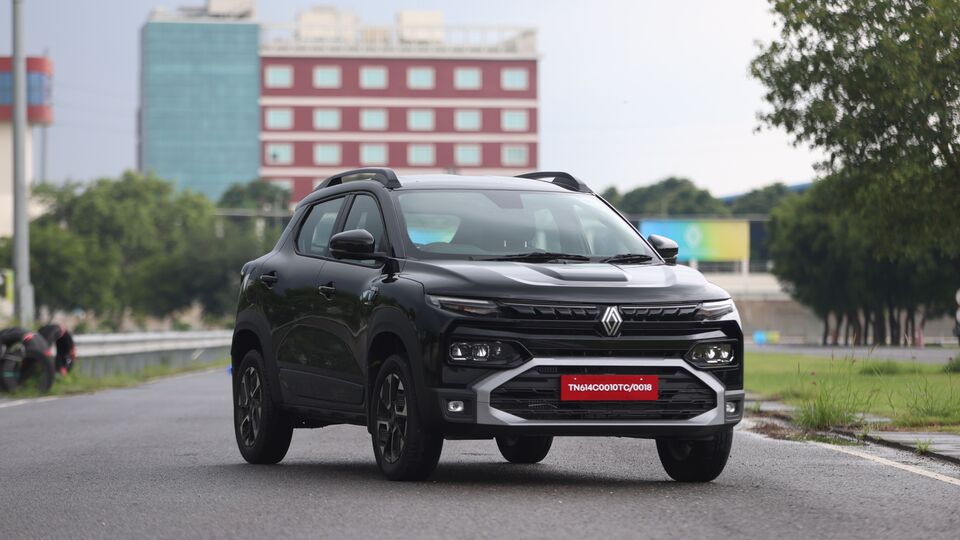
The Renault Kiger has always been one of the sharper-dressed sub-4m SUVs. It carried that European knack of looking expensive even when it wasn’t. Now with the facelift, Renault has made it bolder, particularly up front. The new bumper design gives it more visual aggression, like it’s been to the gym and comes back with broader shoulders. The LED DRLs and headlights continue to look sleek, but the reshaped grille now makes the car seem wider, squatter, more planted.

In profile, it’s still compact, still neat, still carrying that almost hatchback-like stance, which some might argue isn’t “SUV enough." Personally, I like it. It looks confident without trying too hard. But Renault hasn’t changed the sheet metal much, so if you weren’t a fan of its proportions earlier, this update won’t convert you.
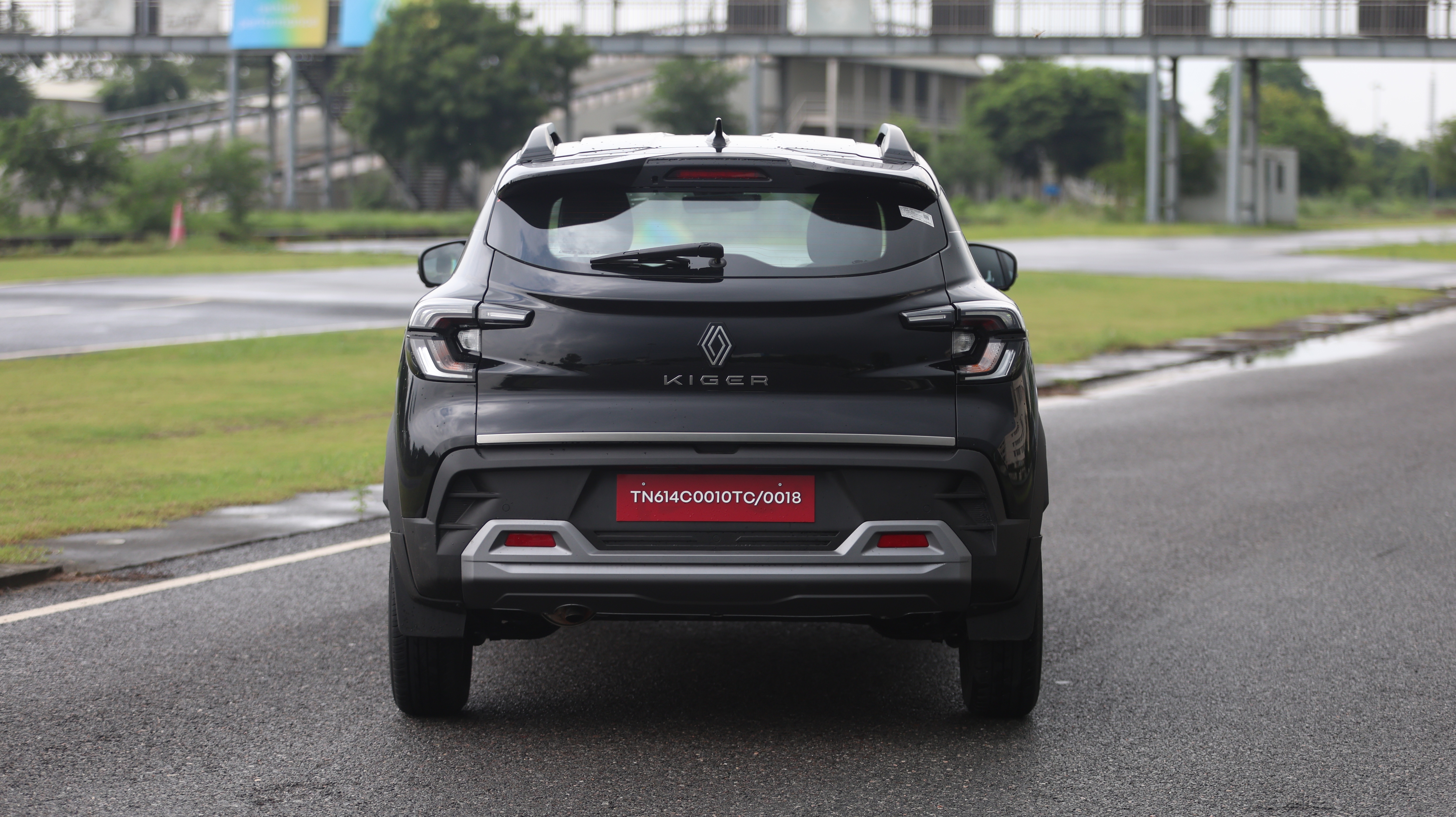
At the rear, the tweaks are subtle but effective. New detailing in the clear tail lamps, a tighter bumper, and a more upright stance all add to the visual punch. It’s a facelift that doesn’t scream for attention but works in a “that’s sharper than I remember" kind of way.
2025 Renault Kiger: Cabin
Step inside and you’ll notice Renault has played around with colours and textures. The new ‘Noir and Cool Grey’ heme does give the cabin a lift. It looks fresher, sportier, and more in tune with what younger buyers want. But scratch below the surface, quite literally, and the same cost-cutting gremlins remain. Plastics feel hard and flimsy at places, the fit isn’t always tight, and the infotainment screen’s resolution looks like it’s stuck a generation behind.
That being said, the ergonomics are decent, and the space utilisation, always a Renault strong suit, remains impressive for something this compact. The driving position is slightly perched up, visibility is good, and the overall ambience is cheerful enough. But then you notice little irritations: the driver’s side door opening feels narrow. My legs got caught more than once while getting in and out, and I’m not exactly NBA material at 5’5". And the seats, though supportive on short stints, may leave you wanting more cushioning on longer runs.

In short: visually spruced up, but tactile quality still lagging.
2025 Renault Kiger: Specifications
Renault’s big brag is weight. At just under a tonne in turbo form, the Kiger is claimed to be the lightest SUV in its segment. Pair that with 99 bhp and 160 Nm from its 1.0-litre turbo-petrol, and you get the best power-to-weight ratio in this category. On paper, it gives Renault the right to shout about ‘rethink.performance’.
Transmission choices are where it gets interesting. The naturally aspirated 1.0-litre with 70 bhp and 96 Nm of torque, paired with manual or AMT is strictly for buyers who care only about A-to-B commuting. The CVT option with the turbo is smooth, but if you actually enjoy driving, the manual is the one to have. That’s the one we tested, and it really brings the Kiger’s lightweight character to life.
Also Read : Renault India charts India revival with Triber, Kiger updates and new SUVs ahead
Three drive modes also alter the personality. Eco limits revs to about 3,500 rpm (helpful for fuel efficiency, not your heart rate). Normal mode is fine for city traffic, throttle response quick enough to keep you moving. But Sport is where the Kiger comes alive, throttle sharp, power delivery eager, and the whole car feeling like it’s had an espresso shot.
Where Renault could’ve gone further is refinement. A three-cylinder engine will always have its quirks, but the vibrations and coarse soundtrack are particularly noticeable here. For a car so focused on performance, the NVH story is a weak point that undercuts its spec-sheet advantage.
2025 Renault Kiger: Drive
The decision to host the Kiger drive at the ICAT track was deliberate. A controlled test facility, usually reserved for homologation, crash safety validation, and certification runs, is not where carmakers typically invite journalists for fun. But Renault wanted the Kiger’s performance credentials to be stress-tested in an environment where cones, steep inclines, and high-speed bankings could reveal more than a Sunday highway run ever would.
The slalom was up first. Here the Kiger surprised, darting left-right-left with the eagerness of a hot hatch rather than a budget SUV. The steering, while not dripping with feel, is well weighted for a car of this type, giving it enough agility and making it precise enough not to make you second-guess corrections. For a car in this segment, that’s a pleasant surprise.
The suspension tune was clearly designed with performance in mind. It’s firm, which on the ICAT’s billiard-smooth tarmac translated to excellent body control. Quick changes of direction didn’t unsettle it, body roll was impressively contained, and even on the high-speed banking, the Kiger tracked true without a hint of nervousness. In the agility test, where sudden directional changes would normally expose a SUV’s limits, the chassis actually felt composed and eager.

Then came the straight-line run. Renault claims 0–100 kmph in 11 seconds. On the rain-soaked track, we managed 12.18 seconds with the manual turbo-petrol. The wet surface no doubt robbed it of traction, but even so, the car never felt sluggish. In fact, the way it builds speed is arguably more important than the stopwatch, always peppy, always eager.
The real surprise, however, was the hill section. ICAT features a punishing 28-degree incline, designed to test both torque delivery and hill-hold ability. We stopped the Kiger midway, clutch in, foot off the brake, and then asked it to pull away. No wheel spin, no drama, the turbo-petrol dug in and the Kiger climbed with the confidence of something far more expensive. It was a small but telling demonstration that the SUV has reserves of pulling power in its light body.
But here’s the caveat: all of this was on a perfect test track. The firm suspension that made it so entertaining around cones and corners might well turn bumpy and restless on Gurgaon’s potholes and speed breakers. That’s the unanswered question. Renault has tuned the Kiger for a sense of sportiness, but whether that firmness translates into discomfort in daily commutes is something only real-world driving can answer. Until then, its ‘rethink.performance’ claim remains half-proven.
Where it could have been better is refinement. Push the 1.0-litre three-cylinder turbo hard and it gets gruff, its vibrations seeping through the pedals and floorboard. For some, that adds character. For most, it will feel unpolished. That slightly coarse soundtrack and pedal rattle keep reminding you that this is a budget SUV stretching hard for performance cred.
Still, credits were due, the Kiger left the ICAT track with its dignity intact. It never embarrassed itself, even in the rain. In fact, it made a strong case for being one of the few sub-compact SUVs that can genuinely be fun when the road ahead climbs, curves, or both, especially for the price it is being offered at.
Verdict
So, has Renault truly “rethought performance" with the Kiger? On the track, yes. It’s light, nimble, and feels more alive than you expect from a compact budget SUV. The drive modes make a genuine difference, the chassis is agile, and even uphill torture tests don’t faze it.
But it’s not perfect. The cabin still feels built to a price, refinement remains questionable, and that firm suspension could divide opinion in the real world. Still, Renault deserves credit for trying something few others in this segment dare: making a small SUV genuinely entertaining.
In a world where sub-4m SUVs are often just jacked-up hatchbacks with extra cladding, the Kiger actually tries to deliver on its sporty promise. And for that alone, it’s worth a rethink.


Editor's Pick



Trending this Week