New Toyota Hilux vs old: What you gain and what you lose?

- Toyota’s ninth-generation Hilux brings a sharper design, a newer cabin and wider variant options, while the outgoing model stays simpler.
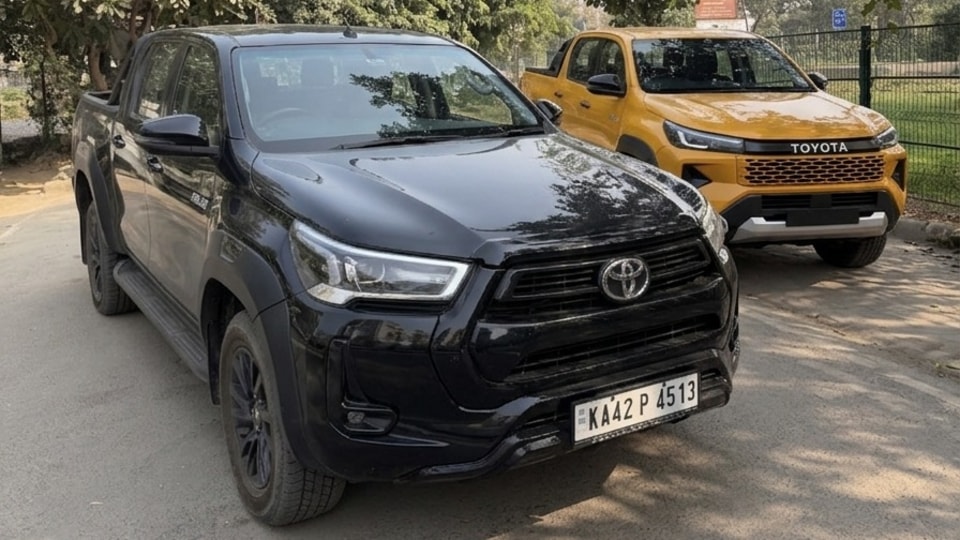


Toyota has launched the ninth-generation Hilux in India, replacing the eighth-generation pickup that first went on sale here in March 2022. The new model keeps the same rugged base and diesel engine, but it looks more modern, gets a more advanced cabin and is now offered in a wider range of variants than before.
New Toyota Hilux vs old model: Design
The biggest difference between the two generations is at the front. The old Hilux had a more familiar Toyota face with the brand logo at the centre, while the new model takes a sharper approach with slimmer LED headlamps, integrated daytime running lamps and a gloss-black strip carrying TOYOTA lettering. Toyota has also given the new pickup a squarer grille with a honeycomb mesh pattern, a more aggressive bumper and a silver skid plate.
Also check these Cars



The side profile remains close to the earlier truck, but the updates are easy to spot when parked next to each other. The new Hilux uses 17-inch alloy wheels instead of the outgoing model’s 18-inch wheels, and the finish has shifted to blacked-out styling rather than silver.
The wheel-arch cladding is slimmer, the mirrors and door handles are black, and there are small side steps built into the rear bumper to make loading the bed easier. At the rear, the earlier model’s B-shaped tail-lamps have been replaced by C-shaped LED units, while the tailgate now carries larger TOYOTA lettering.
New Toyota Hilux vs old model: Cabin and features
Inside, the gap between the two generations is even more obvious. The outgoing Hilux used an analogue driver display and an 8-inch touchscreen, but the new model moves to a digital instrument cluster and a larger 12.3-inch infotainment screen. It also gets a chunkier three-spoke steering wheel and retains plenty of physical switches, which should keep it easy to use in daily driving.
That said, Toyota has also trimmed a few comfort features from the new India-spec truck. Compared with the older model, the latest Hilux no longer offers automatic climate control, second-row AC vents, an auto-dimming IRVM, leather seats or a power-adjustable driver’s seat.
Instead, it uses manual air conditioning, a conventional mirror, fabric upholstery and manual seat adjustment. Top variants do get a wireless charger and wireless Apple CarPlay and Android Auto, while safety equipment includes seven airbags, ABS and Isofix mounts. An ADAS suite is still not part of the package.
New Toyota Hilux vs old model: Powertrain
Mechanically, both generations are closely related because the new Hilux continues on the same IMV platform and keeps the 2.8-litre diesel engine. Output remains 204 bhp and 500 Nm, but the big change is in transmission choice: the new model gets only a 6-speed torque-converter automatic, while the older Hilux was sold with both manual and automatic gearboxes.
Toyota now offers the pickup in both two-wheel-drive and four-wheel-drive form, whereas the outgoing model was sold only with four-wheel drive in India.
Also Read : 2026 Toyota Hilux vs Isuzu V-Cross spec comparison: price, engine, features
New Toyota Hilux vs old model: Pricing
Pricing has also shifted. The older Hilux was listed at ₹35.3 lakh for the manual 4x4 and ₹36 lakh for the automatic 4x4. The new model starts at ₹31.99 lakh and goes up to ₹36.69 lakh, which gives Toyota a lower entry point and a broader spread of options.


Editor's Pick



Trending this Week