HT Auto Leaderboard Awards: India must localise EV technology to stay globally competitive: Mercedes-Benz India CEO

- Santosh Iyer, MD & CEO, Mercedes-Benz India, said India’s cost advantage in conventional cars may not carry over to EVs and newer technologies, making localisation and innovation critical at the HT Auto Leaderboard Awards 2026.
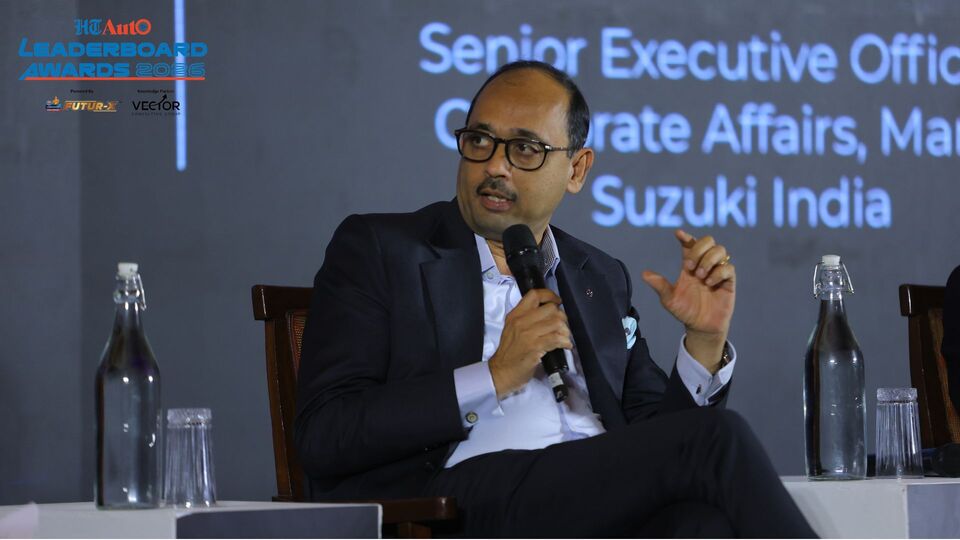


India has established itself as one of the world's most cost-competitive markets for conventional automotive manufacturing, but maintaining that advantage as the industry shifts towards electric vehicles and newer technologies will be a major challenge, said Santosh Iyer, MD & CEO, Mercedes-Benz India. He made the remarks at the HT Auto Leaderboard Awards 2026, powered by HPCL with Knowledge Partner Vector Consulting, during the panel discussion on “Make for the World: Is India Ready to Become the World’s Auto Powerhouse?"
Iyer said India has built a strong manufacturing ecosystem around conventional powertrains, but the same level of competitiveness has not yet been established across technologies such as EVs, plug-in hybrids, advanced driver assistance systems and connected vehicles.
Also check these Vehicles


“We can easily say that India is one of the most cost-competitive markets in combustion engines. I don’t think any other market or geography in the world can really look at the cost competitiveness and including quality as well on combustion engines," he said.
“But is that same true for EVs, PHEVs, newer technologies? That’s a big question mark," Iyer added.
He said the transition towards electrification is increasing the importance of batteries, electronics and other high-value components, making deeper localisation increasingly important for India to remain competitive.
“Those days are gone. We are one of the most, or the best, cost-competitive markets in the world, I would say, as India in terms of manufacturing cars. But we also need to ensure that we are able to be as competitive in the future with newer technologies coming in, where our dependency is still a lot on import," Iyer said.
Iyer also pointed to autonomous driving and ADAS as areas where India needs to build greater capabilities if it wants to develop products for global markets. He said the technology is not limited to fully driverless vehicles, but also involves systems that can reduce the workload on drivers.
“Today more and more developed countries, the need for autonomous driving is coming up," he said. “The key idea is to give time back to the driver."
Logistics is another area that Iyer said needs attention. He argued that India's export competitiveness is affected by logistics costs, particularly in road transport and shipping.
“So I think that ecosystem to develop to get those costs down, and coupled with what OEMs can do, to make India truly competitive with world-class products," he said.
Get insights into Upcoming Cars In India, Electric Vehicles, Upcoming Bikes in India and cutting-edge technology transforming the automotive landscape.
Editor's Pick

Trending this Week