

Tata Aeris Key Specs
- Engine1199 cc
- Mileage19.2-28.6 kmpl
- Power74.4 - 84.8 bhp
- FuelPetrol | CNG
- Max Torque96.5 - 113 Nm
- Drive TrainFWD


 8 Oct 202629 Sept 202628 Sept 202627 Sept 2026

| CAR | IMAGE | EX-SHOWROOM PRICE | USER RATINGS | POWER | TORQUE | TRANSMISSION | AIRBAGS | SAFETY RATING* | GROUND CLEARANCE | BOOT SPACE | LENGTH | WIDTH | HEIGHT | TURNING RADIUS | COMPARISON |
|---|
| CAR | IMAGE | EX-SHOWROOM PRICE | USER RATINGS | POWER | TORQUE | TRANSMISSION | AIRBAGS | SAFETY RATING* | GROUND CLEARANCE | BOOT SPACE | LENGTH | WIDTH | HEIGHT | TURNING RADIUS | COMPARISON |
|---|---|---|---|---|---|---|---|---|---|---|---|---|---|---|---|
| Tata Aeris | Rs. 5.29 LakhsOnwards | - | 74 bhp | 96.5 Nm | Manual, Automatic | 6 | - | 170 mm (unladen) | - | 3995 mm * 1684 mm * 1532 mm | 1684 | 1532 | 5.1 metres | ||
| Hyundai Aura | Rs. 6 LakhsOnwards | 68 bhp | 95 Nm | Manual, Automatic | 6 | - | - | 402 litres | 3995 mm | 1680 mm | 1520 mm | - | AerisVSAura | ||
| Maruti Suzuki Dzire | Rs. 6.31 LakhsOnwards | 69 bhp | 101.8 Nm | Manual, Automatic | 6 | 163 mm | - | 3995 mm | 1525 mm | 1735 mm | 4.8 metres | AerisVSDzire | |||
| Honda Amaze | Rs. 7.65 LakhsOnwards | 89 bhp | 110 Nm | Manual, Automatic | 6 | - | 172 mm | 416 litres | 3995 mm | 1733 mm | 1500 mm | 4.9 metres | AerisVSAmaze |
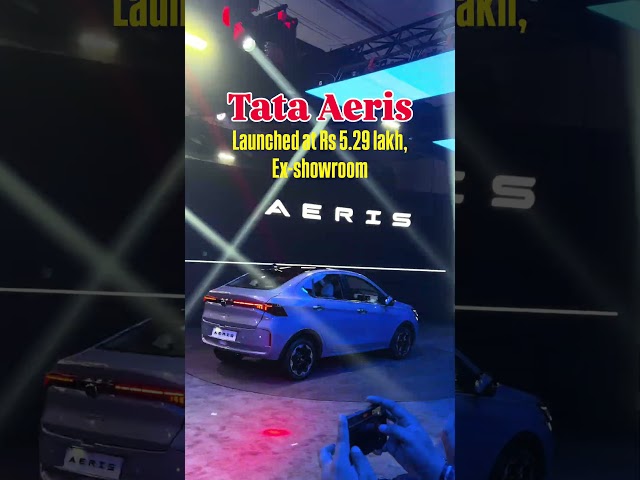
The sub-compact sedan really burst onto the scene in 2010 with the launch of the Tata Indigo CS, which paved the way for the popular models including the current-day Maruti Suzuki Dzire, Honda Amaze and Hyundai Aura. The Tigor arrived as a true successor of the Indigo CS in 2017, with the latter being discontinued in 2018. The Tigor provided tough competition to its competitors, with its electric iteration being a fairly popular model. After a couple of mid-life updates, Tata did away with the Tigor and in came the Aeris, with a new name and new identity, boasting the same silhouette but way more tech and features than the Tigor. While the soul remains the same, the body gets modifications which have given the car a new lease of life. We drove the Aeris for a day, and here’s our two cents on the latest iteration of the sub-compact sedan from the house of Tata.Cars:
From the outside, the Tata Aeris looks like a rather dashing car when you first look at it. It does have plenty of aesthetic similarities to its hatchback sibling, the Tiago, including the LED headlights with eyebrow-shaped LED DRL, a piano black panel which replaces the front grille, cladding on the wheel arches, blacked-out ORVMs, a similar connected LED taillamp design, a blacked-out roof and vertically placed reflective strips at the rear. However, the Tata Aeris gets a different new bumper design in the front as well as the back, a new alloy wheel design and a connected-like taillamp, which sets it apart from the Tata Tiago. On top of that, the Tata Aeris gets an integrated spoiler with high-set stop lamps at the rear. Opening the tailgate reveals a massive 419 litres of boot space in the petrol variants, which is the highest in the segment.
The interior is arguably a space where Tata has made the most changes, and it shows just that. Gone is the sweeping dashboard design; in comes the layered dashboard design. Not only that, but to make the interior look premium, Tata has added fabric inserts to the dashboard, door trims and leatherette seats, giving it an upmarket look. Featuring a beige colour, the cabin, when seated inside the Tata Aeris, looks extremely roomy and airy, making the car feel bigger on the inside. The seats are pretty comfortable themselves, with the cushioning being on-point across the front and rear seats. The i-Toggle power window switches are a big change and have been carried over from the electric iteration of the Tata Tiago, in order to add more premium feel to the Tata Aeris’ cabin.
Moreover, the centre console has also been changed a little, with the central AC vents taking on a completely new shape. The gloss black panel surrounding the central AC vents found in the Tata Tigor has been done away with. In addition, the buttons for the 360-degree camera, hazard lights and fog lamps have been moved up, compared to the outgoing Tigor. The AC controls have been borrowed straight from the Tata Tiago, with the only difference being the Aeris badging on them. Similarly, the door and cup holders boast the same ‘squirrel easter eggs’ as in the Tiago, along with two cup holders, two pads to stow smartphones, one of them being a wireless smartphone charger, a 65W USB Type-C charging port, and a front centre armrest with some storage to keep daily essentials at an arm’s reach.
The feature list is quite rich when it comes to the Tata Aeris, much like any of its siblings. One of the standout features of the Tata Aeris is its 10.25-inch infotainment system with wireless Android Auto and Apple CarPlay. It is an extremely slick unit to use and has great responsiveness even when you’re on the move. Getting connected feels like a breeze, and the screen itself is pretty bright, allowing you great visibility even when harsh light fills the cabin. However, I was struggling when it came to the visibility of the infotainment system during sunset. The 5-inch digital instrument cluster also looks cool and goes well with the interior of the Aeris. The visibility of the instrument cluster remains the same as the infotainment system, but so do the issues.
The new matte-finished D-cut steering wheel looks great to begin with. It feels great in your hands and is pretty light to use. The feature buttons on the steering wheel have a great seamless feel to them and offer great functionality, especially in situations when looking away from the road can be a problem. The biggest feature addition in the Tata Aeris is ventilated front seats, which are also a first-in-segment feature. The AC and ventilated seats do a great job of keeping the front passengers cool. While these are comfort features, Tata still gives you every bit of assurance when it comes to safety with the Aeris. The 360-degree camera, while being an extremely useful feature, can also be operated as an integrated dashcam, which can record incidents that might look suspicious on the road, as it can record up to 30 minutes of footage. It automatically starts recording for 5 minutes in case of hard braking, and plugging in a pen drive will allow customers to record for longer durations.
The rear seats have also been given some respite in the constantly worsening Indian summers with rear AC vents provided in the Tata Aeris, to keep the rear passengers cool. A 65W USB Type-C charging port has also been provided to keep the passengers entertained, as they can charge their phones on the go. Lastly, the centre armrest and two cup holders in it make the journey that much more comfortable. One of the things that I feel could have been improved is the addition of adjustable rear headrests in the Tata Aeris, especially in higher variants.
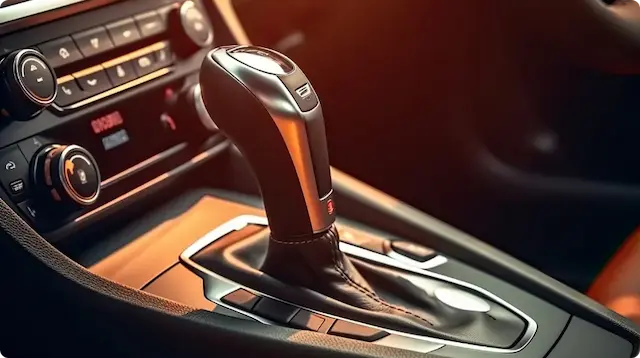
The Tata Aeris is powered by a 1.2L naturally aspirated three-cylinder engine producing 86 bhp and 115 Nm of torque, paired with a five-speed manual or a five-speed AMT. We drove the car in the city, on the highways, as well as some minor off-roading, and it fared pretty well across all three stages. Driving the car is as easy as eating a piece of cake in the city, as it cruises at city speeds without putting in any effort. While the clutch is light, the gearbox is something that could have been better. It feels extremely choppy and definitely a level below its Japanese and South Korean rivals.
When we had open stretches of road, I floored the pedal, but the response was delayed. I lost my patience and had to downshift eventually to get the car going. We also did a 0 to 100 kmph acceleration run, and the car took almost 20 seconds to reach 100, and this did not even have a CNG tank in the back. However, the suspension is a complete game changer for the car, as I barely felt any potholes or rough patches of roads when I was cruising. It went pretty effortlessly over all of them, minimising the sensation of being thrown around in the cabin by a significant margin. The car held speed pretty well, but crossing the 120 kmph barrier made it feel like a fish out of water, and the vibrations of the car could be felt on the gear lever as well as the pedals. While the engine is tuned for comfort, a little bit of pep and refinement could go a long way for the Tata Aeris.
The Aeris also gets an iCNG version, much like the Tiago, along with an AMT transmission. The iCNG version of the Tata Aeris gets a reduced output of approximately 75 bhp and 96 Nm of torque. While the car is severely underpowered, the AMT shifts well, and it does not feel out of place. The iCNG is a great proposition when it comes to a daily office commute, especially in places where the traffic is absolutely stop-and-go. The absence of a third pedal and an AMT can provide much-needed respite from the fatigue of driving cars for long durations in a day. The Tata Aeris iCNG boasts a few differences over the petrol-powered Aeris, including smaller 14-inch steel wheels with wheel covers, reduced boot space of 217 litres and an iCNG badge at the rear.
The Tata Aeris doubles down on the value-for-money proposition that the Indian automaker is really famous for. The price and the feature additions, all under ₹9 lakh (ex-showroom), make it a really enticing proposition for customers looking to buy a micro SUV or a sub-4m SUV.
Tata Aeris is available in the 6 Colours in India.
View all Popular Compact Sedan Cars
| Max Power | 74.4-84.8 bhp |
| Rear AC Vents | Yes |
| Airbags | 6 Airbags |
| Body Type | Compact Sedan |
| Max Torque | 96.5-113 Nm |
| Mileage | 28.6 kmpl |
| Transmission | Manual,Automatic |
| Engine | 1199 cc |
| Fuel Type | Petrol,CNG |
Popular Tata Cars