PriceSpecs & FeaturesMileageUser ReviewsImages

BAJAJ Pulsar 150

₹1.15 - 1.29 Lakhs*
*Ex-showroom price
3.8Expert Score

The 2026 Bajaj Pulsar 150 features an upgraded diamond frame, a monoshock rear suspension, selectable riding modes, and a 5-inch colour TFT console with Google Maps navigation.

2026 Bajaj Pulsar 150 Price and Variant Breakdown

VariantKey Equipment & Tech SetupEx-Showroom Price (Delhi)
Single Disc Single Seat4.8-inch Digital LCD Display, Single Seat, Rear Drum Brake, Single-Channel ABS ₹1,15,233
Twin Disc Single Seat5-inch Colour TFT Display, Bluetooth & Google Maps Navigation, Rear Disc Brake, ISG ₹1,22,184
Twin Disc Split Seat5-inch Colour TFT Display, Split Seat Setup, Rear Disc Brake, ISG, LED Indicators ₹1,23,187

Engine Performance and Fuel Efficiency

  • Engine: 149.5 cc, single-cylinder, 4-stroke, air-and-oil-cooled BS6 Phase 2 (E20 Fuel Compliant)
  • Maximum Power: 14 PS (13.81 bhp) @ 8,000 rpm
  • Maximum Torque: 14.1 Nm @ 6,500 rpm
  • Transmission: 5-speed manual gearbox with refined shift calibration
  • Acceleration: 0 to 60 km/h in 5.7 seconds
  • Top Speed: 115 km/h
  • Claimed Mileage: 50 kmpl
  • Fuel Tank Capacity: 15 Litres (delivers a riding range of up to 750 km per full tank)

Chassis, Suspension, and Brakes

  • Frame Architecture: Diamond-type tubular frame with engine as a stressed member
  • Kerb Weight: 141 kg
  • Front Suspension: 33 mm telescopic fork (125 mm travel)
  • Rear Suspension: Monoshock absorber (110 mm travel)
  • Braking Hardware: Single-channel ABS standard
  • Front Brake: 260 mm disc
  • Rear Brake: 130 mm drum (Single Disc variant) or 230 mm disc (Twin Disc variants)
  • Ground Clearance: 186 mm
  • Seat Height: 785 mm
  • Tyres: 80/100-17 (Front), 100/90-17 (Rear) tubeless tyres on 17-inch alloy wheels

Key Technology and Comfort Features

  • Digital Cockpit & Connectivity: Base trim uses a 4.8-inch LCD console, while higher variants feature a 5-inch colour TFT display with Bluetooth, Wi-Fi, turn-by-turn Google Maps navigation, call/music alerts, and real-time mileage readouts.
  • Selectable Riding Modes: Segment-first addition of three riding modes (Road, Rain, and Sport) that adjust power delivery and throttle calibration.
  • Integrated Starter Generator (ISG): Enables silent engine restarts and stop-start functionality on Twin Disc variants.
  • Low-Speed Assist: Smooths out clutch modulation at crawl speeds to prevent engine stalling in heavy traffic.
  • Lighting System: Class-B LED headlight with wolf-eye DRLs, redesigned crystal LED tail light, and LED turn blinkers.
  • Convenience: Built-in USB Type-C charging port, hazard lights, double horn setup, engine belly pan, and side-stand engine cut-off.

2026 Bajaj Pulsar 150 vs Segment Competitors

Motorcycle ModelEx-Showroom Price RangeEngine SizePeak Power / TorqueKey Highlight
Bajaj Pulsar 150 ₹1,15,233 – ₹1,23,187149.5 cc14 PS / 14.1 NmRiding Modes, TFT Navigation, Monoshock
Honda SP160 ₹1,13,000 – ₹1,19,000162.7 cc13.18 PS / 14.58 NmStrong Low-End Torque, Conservative Styling
Yamaha FZS-FI V4 ₹1,20,000 – ₹1,29,000149 cc12.4 PS / 13.3 NmTraction Control System, Light Kerb Weight
TVS Apache RTR 160 ₹1,14,000 – ₹1,25,000159.7 cc16 PS / 13.85 NmHigher Peak Power Output, Track Telemetry

Pros and Cons

Pros:

  • Significant weight drop to 141 kg due to the new diamond frame and monoshock architecture.
  • Addition of selectable riding modes (Road, Rain, Sport) in the 150cc commuter segment.
  • Full-colour 5-inch TFT console with turn-by-turn map navigation on top variants.
  • Tractable air-and-oil-cooled engine with responsive mid-range torque.

Cons:

  • Switching riding modes using the display screen requires the bike to be stationary.
  • Dual-channel ABS option is not available.

Bajaj Pulsar 150 FAQs:

What is the ex-showroom price of the Bajaj Pulsar 150 in 2026?

The ex-showroom price (Delhi) for the Bajaj Pulsar 150 ranges from ₹1,15,233 for the base variant to ₹1,23,187 for the top-spec variant.

What variants are available for the Bajaj Pulsar 150?

The motorcycle is available in three distinct variants:

Single Disc Single Seat ( ₹1,15,233): Features a 4.8-inch digital LCD display, single-piece seat, 130 mm rear drum brake, and single-channel ABS.

Twin Disc Single Seat ( ₹1,22,184): Adds a 5-inch colour TFT display with Bluetooth and Google Maps navigation, 230 mm rear disc brake, and an Integrated Starter Generator (ISG).

Twin Disc Split Seat ( ₹1,23,187): Combines the 5-inch colour TFT display and navigation suite with sporty split seating, rear disc brake, ISG, and LED turn indicators.

What is the real-world mileage and riding range of the Bajaj Pulsar 150?

The Bajaj Pulsar 150 delivers a claimed fuel efficiency of 50 kmpl. Combined with its 15-litre fuel tank, the motorcycle offers a riding range of up to 750 km per full tank.

What are the engine specifications, power output, and top speed?

The motorcycle is powered by an updated 149.5 cc single-cylinder, air-and-oil-cooled, BS6 Phase 2 (E20 fuel compliant) engine.

Peak Power: 14 PS (13.81 bhp) @ 8,000 rpm

Peak Torque: 14.1 Nm @ 6,500 rpm

Transmission: 5-speed manual gearbox

Acceleration: 0 to 60 km/h in 5.7 seconds

Top Speed: 115 km/h

Does the 2026 Bajaj Pulsar 150 feature Bluetooth navigation?

Yes. Twin Disc variants come equipped with a 5-inch colour TFT display featuring Bluetooth and Wi-Fi connectivity. It supports turn-by-turn Google Maps screen mirroring, incoming call and music controls, and real-time fuel consumption readouts.

What riding modes are offered on the Pulsar 150?

Higher variants include three selectable riding modes:

Road Mode: Provides balanced throttle response for daily city riding.

Rain Mode: Adjusts power delivery for smooth acceleration on wet surfaces.

Sport Mode: Delivers sharper throttle calibration for fast highway cruising.

(Note: The motorcycle must be stationary to toggle between riding modes).

What additional equipment is standard on top variants?

Twin Disc models include an Integrated Starter Generator (ISG) for silent engine starts, Low-Speed Assist to prevent stalling in bumper-to-bumper traffic, a built-in USB Type-C charging port, hazard light controls, an engine belly pan, and a dual-horn setup.

What are the key dimensions and kerb weight of the Pulsar 150?

Kerb Weight: 141 kg

Ground Clearance: 186 mm

Seat Height: 785 mm

Fuel Tank Capacity: 15 Litres

What suspension and braking setup does the motorcycle use?

The bike transitions to a diamond-type frame using 33 mm telescopic front forks (125 mm travel) and a rear monoshock absorber (110 mm travel). Stopping power is provided by a 260 mm front disc brake, a rear 230 mm disc brake (or a 130 mm drum on the base model), and standard single-channel ABS.

Bajaj Pulsar 150 Key Specs

  • Engine iconEngine
    149.5 cc
  • Mileage iconMileage
    47.5 kmpl
  • Power iconPower
    14 ps
  • Speed iconSpeed
    115 kmph
  • MaxTorque iconMax Torque
    14.1 Nm
  • KerbWeight iconKerb Weight
    141 kg
View All Pulsar 150 SpecsView specs icon

Bajaj Pulsar 150 Videos

  • Quick Shorts
  • Full Videos

Bajaj Pulsar 150 Variants

Bajaj Pulsar 150 price starts at ₹ 1.15 Lakhs and goes up to ₹ 1.29 Lakhs (Ex-showroom). Bajaj Pulsar 150 comes in 4 variants. Bajaj Pulsar 150's top variant is Twin Disc Premium Split Seat TFT.
4 Variants Available
149.5 cc
149.5 cc
149.5 cc
*Disclaimer: The prices are ex-showroom price for the respective model in the selected city.

Bajaj Pulsar 150 Latest Updates

Calendar icon28 Oct 2026
Bajaj Auto reported record Q2 revenue and profits, driven by 20% vehicle-sales growth, surging exports, and strong electric-vehicle demand.Read Full Story
Calendar icon6 Oct 2026
Bajaj Auto offers festive benefits up to Rs 12,000 across its Pulsar range to attract motorcycle buyers.Read Full Story
Calendar icon21 Sept 2026
The text compares electric scooters as potential upgrades from the Pulsar 150, highlighting Bajaj Chetak, Ather 450X, TVS iQube, Vida VX2 Plus, and River Indie for their design, performance, and practicality.Read Full Story
Calendar icon12 Sept 2026
The 2026 Pulsar 150 retains its iconic design while integrating significant updates for enhanced performance and comfort.Read Full Story
Calendar icon26 Aug 2026
Bajaj Auto plans to launch three new products and two sub-brands, aiming to boost sales amid industry growth.Read Full Story

Bajaj Pulsar 150 Visual Comparison

Choose a model from the dropdown below to visually compare its features with Pulsar 150.
Bajaj Pulsar 150
Honda SP160
VS
Bajaj Pulsar 150Select model
Honda SP160Select model
Select a feature you want to compare:
Seat View
Engine View
Fuel Tank View
Rear Tyre View
Front Right View
Right View
plus iconView more
Swipe Left
Drag the handle left & right to view full image
Swipe Right

Bajaj Pulsar 150 comparison with similar Bikes

BIKEIMAGEEX-SHOWROOM PRICEUSER RATINGSENGINEPOWERTORQUEBODY TYPEKERB WEIGHTLENGTHFRONT BRAKEREAR BRAKEWHEEL TYPECOMPARISON
Bajaj Pulsar 150
Bajaj Pulsar 150 image
Rs. 1.15 LakhsOnwards
4.5100
149.5 cc14 PS14.1 NmCommuter Bikes141 kg2055 mmDiscDrumAlloy
Honda SP160Honda SP160 imageRs. 1.18 LakhsOnwards
4.5102
162.71 cc13.18 PS14.8 NmCommuter Bikes140 kg2061 mmDiscDisc-Pulsar 150VSSP160
Honda UnicornHonda Unicorn imageRs. 1.2 LakhsOnwards
4.3116
162.71 cc13.18 PS14.58 NmCommuter Bikes139 kg2081 mmDiscDiscAlloyPulsar 150VSUnicorn
Bajaj FreedomBajaj Freedom imageRs. 1.04 LakhsOnwards
4.453
125 cc9.5 PS9.7 NmCommuter Bikes147 kg-DiscDrumAlloyPulsar 150VSFreedom
Bajaj Pulsar 125Bajaj Pulsar 125 imageRs. 92,990Onwards
4.41320
124.58 cc12.1 PS11.4 NmCommuter Bikes144 kg2055 mmDiscDrumAlloyPulsar 150VSPulsar 125
Honda CB125 HornetHonda CB125 Hornet imageRs. 1.03 LakhsOnwards
4.3126
123.94 cc11.14 PS11.2 NmCommuter Bikes124 kg2015 mmDisc-AlloyPulsar 150VSCB125 Hornet

Bajaj Pulsar 150 Expert Review

3.8
Styling
4
Ride & Handling
3.7
Cost

Pros

Confident corneringSmoother gear shiftsStrong exhaust noteQuality switchgear

Cons

Spongy front brakeNo dual-channel ABSNo sixth gear

What began in the early 2000s with the tagline of ‘Definitely male’ has endured its challenging journey through to 2026. Along the way, it underwent about eight updates, both big and small. When it began, there was little direct competition. But today it stands at a crossroads with rivals that constantly challenge it to do better in all areas, from fuel economy, design and performance to its overall value for money and pull factor.

Unmistakably a Pulsar still

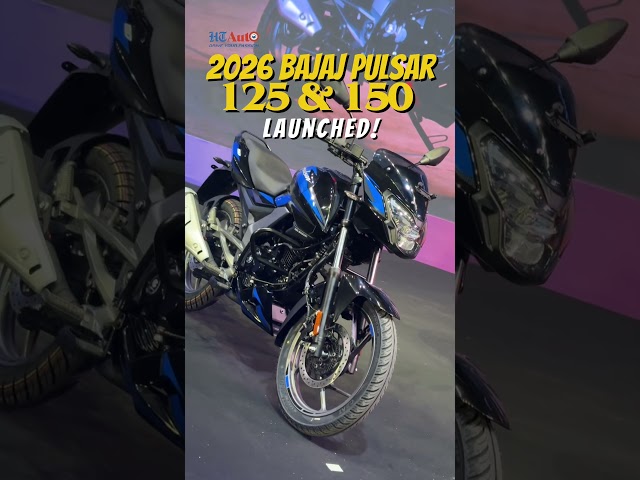
The design has been updated, but it hasn’t been made radically new. The redesigned LED headlamp now sits inside a black plastic surround, and even from a distance, there is no mistaking this for anything other than a Pulsar. In fact, there is a clear resemblance to the smaller Pulsar 125 as well.

The redesigned LED headlamp gives the Pulsar 150 a sharper face.

Some riders may not like the fact that Bajaj has played it safe, but personally, I think the company has understood the assignment. Given that the brief was essentially to give existing buyers something recognisable but newer, the sharper face works.

The changes are more obvious up close. The lower section of the fuel tank is more sculpted, creating a natural surface for your knees to grip. That makes a difference once you start pushing the bike through a corner. The tail has also been sharpened, and the exhaust now gets a more angular, hexagonal design.

The sharper tail section and new hexagonal exhaust add subtle visual changes.

A lighter-feeling motorcycle

The bigger changes are underneath. The 149.5 cc engine has been reworked and now contributes to chassis stiffness by being a load-bearing member, and the motorcycle now gets a monoshock rear suspension. Bajaj has also worked on the power-to-weight ratio, and the new bike feels noticeably more willing to change directions.

I found the Pulsar 150 particularly confidence-inspiring in corners. It doesn’t feel nervous halfway through a turn, nor did I experience any sense of flex when leaning it over. The monoshock plays its part too.

What I liked even more was the suspension tune. It is soft and well suited to Indian roads, where potholes can appear almost without warning. However, the new setup can bottom out when you attack larger potholes a little too enthusiastically.

Engine has more character

The engine itself revs happily, and the power delivery is fairly linear. Throttle response is immediate, and the lower weight gives the motorcycle a more lively character than you might expect from the numbers alone. The revised five-speed gearbox also feels smoother, while the clutch is particularly light and easy to live with in traffic.

The new motorcycle makes 14 PS and 14.1 Nm, with peak torque arriving at 6,500 rpm. There is no dramatic punch that catches you off guard, but that is not really the point here. The Pulsar 150 feels easy to ride quickly, and that is arguably more useful on a motorcycle aimed at everyday riders.

The revised engine feels more responsive thanks partly to the motorcycle’s lower overall weight.

And then there is the exhaust note. It has that familiar Pulsar depth and sounds surprisingly good once you are on the move. It is one of those small things that adds character to an otherwise fairly sensible motorcycle.

Hardware

The new monoshock replaces the older twin-shock arrangement and, along with the stiffer frame, gives the motorcycle a more planted feel. The dual-disc setup on the variant we rode also works reasonably well. The front brake has good bite, although the lever feel remains a little spongy, something that has been noticeable on earlier versions too. The rear brake, meanwhile, is sharper and can encourage a little playful behaviour when the road permits it.

The bike we rode came with the new TFT display, which is neatly laid out and fairly intuitive. The switchgear used to operate it also feels good for a motorcycle in this price bracket. However, we were on the variant below the top-spec version, so we could not test the screen-mirroring and Google Maps functionality. Bajaj offers these connected features with the higher-spec setup.

The new TFT console is neatly laid out and easy to operate.

The alloy wheels also look good, but they are available on the Pulsar 125 too. That may not bother everyone, although buyers spending more on the 150 could reasonably expect a little more visual distinction.

Comfort and ergonomics

The ergonomics have largely been retained from the outgoing motorcycle. The clip-on handlebars keep your wrists in a fairly natural position, and I didn’t feel any notable strain during the ride. The split seat on the variant we rode is also well cushioned.

The one big unanswered question for me is fuel economy. Bajaj has talked about a roughly 5 kmpl improvement with the new model, but that is something I would want to test over a longer period rather than judge on a first ride.

There is also an auto start-stop function that worked well during our ride. But the motorcycle still misses out on dual-channel ABS, which is available on the Pulsar N160, and I did find myself wishing for a sixth gear on open stretches.

The split seat offers good cushioning for longer rides.

Verdict

The 2026 Pulsar 150 feels like Bajaj has resisted the temptation to reinvent something simply for the sake of it. It still looks like a Pulsar, still sounds like one and still has the basic character that has kept the name alive for so long.

But underneath that familiar skin, there is enough change to make it feel fresher. The lighter-feeling chassis, improved cornering confidence, smoother gearbox and comfortable suspension make it a more enjoyable motorcycle to ride than the old formula might suggest.

It isn’t perfect, and some of the omissions are hard to ignore when newer rivals are becoming increasingly feature-heavy. But after a first ride, the Pulsar 150 does feel like it has evolved in the right direction without forgetting what made it popular in the first place.

Bajaj Pulsar 150 Images

Bajaj Pulsar 150 Image 1
Bajaj Pulsar 150 Image 2
Bajaj Pulsar 150 Image 3
Bajaj Pulsar 150 Image 4
Bajaj Pulsar 150 Image 5
Bajaj Pulsar 150 Image 6

Bajaj Pulsar 150 Alternatives

Bajaj Pulsar 150 User Reviews & Ratings

4.5Engine & Performance
4.3Features
4.4Safety
4.6Design
4.6Value For Money
4.4Comfort
Read all ReviewsRead Arrow

Bajaj Pulsar 150 Specifications and Features

Max Power14 PS
Body TypeCommuter Bikes
Max Torque14.1 Nm
Charging PointYes
Kick and Self StartYes
Mileage47.5 kmpl
TransmissionManual
Mobile Connectivityyes
HeadlightLED
Engine149.5 cc
Fuel TypePetrol
Max Speed115 kmph

Popular Bajaj Bikes

  • Popular
  • Upcoming
View all  Bajaj Bikes