3i20 is #3 of 4

See where HT Auto's editors placed the i20 in their top picks


 17 Sept 20263 Sept 202626 Aug 202620 Aug 202610 Aug 2026
| CAR | IMAGE | EX-SHOWROOM PRICE | USER RATINGS | POWER | TORQUE | TRANSMISSION | AIRBAGS | SAFETY RATING* | GROUND CLEARANCE | BOOT SPACE | LENGTH | WIDTH | HEIGHT | TURNING RADIUS | COMPARISON |
|---|
| CAR | IMAGE | EX-SHOWROOM PRICE | USER RATINGS | POWER | TORQUE | TRANSMISSION | AIRBAGS | SAFETY RATING* | GROUND CLEARANCE | BOOT SPACE | LENGTH | WIDTH | HEIGHT | TURNING RADIUS | COMPARISON |
|---|---|---|---|---|---|---|---|---|---|---|---|---|---|---|---|
| Hyundai i20 | Rs. 6 LakhsOnwards | 87 bhp | 114.7 Nm | Manual, Automatic | 6 | - | 311 L | 3995 mm | 1775 mm | 1505 mm | - | ||||
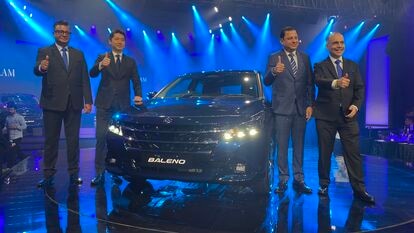
| Maruti Suzuki Baleno | Rs. 5.99 LakhsOnwards | 69 bhp | 101.8 Nm | Manual | 6 | - | - | - | 3990 mm | 1530 mm | 1745 mm | 4.85 metres | i20VSBaleno | ||
| Maruti Suzuki Swift | Rs. 5.84 LakhsOnwards | 80 bhp | 111.7 Nm | Manual, Automatic | 2 | 163 mm | 265 litres | 3860 mm | 1735 mm | 1520 mm | 4.8 metres | i20VSSwift | |||
| Hyundai Grand i10 Nios | Rs. 5.6 LakhsOnwards | 82 bhp | 114 Nm | Manual, Automatic | 6 | - | 260 litres | 3815 mm | 1680 mm | 1520 mm | - | i20VSGrand i10 Nios | |||
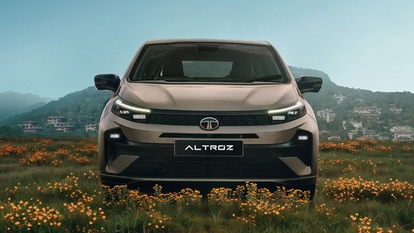
| Tata Altroz | Rs. 6.3 LakhsOnwards | 72 bhp | 103 Nm | Manual, Automatic | - | - | - | 447 L | - | - | - | 5 metres | i20VSAltroz | ||
| Maruti Suzuki Wagon R Bioflex | Rs. 7.24 LakhsOnwards | 89.6 bhp | 113.7 Nm | Manual | - | - | - | 335 L | 3655 | 1620 | 1675 | 4.7 m | i20VSWagon R Bioflex |
Hyundai i20 2020 was the final launch of the calendar year from the Korean car maker and there is perhaps no better way to bid farewell to a challenging year than to drive in a car that's been a common sight on Indian roads and still manages to now doggedly grab the spotlight and put it all on itself.
The new i20 from Hyundai was launched last week and in its third-generation, the updates are many and the updates are significant. Multiple engine options, multiple transmission choices, a whole new look, an updated cabin, plethora of features and the promise of a safer drive - this car makes more promises than a politician before elections. And much like how elected representatives need to be held accountable, I took this premium hatch on a morning-to-evening spin to find out just how good it really is.
Drive Dynamics
No one change in the new i20 ought to brag about being the one most significant. And yet, the inherent test of any car in any segment is how it moves. Hyundai is offering its latest in three engine options - 1.2-litre petrol, 1.0-litre turbo and a 1.5-litre diesel. Being a petrol-head of sorts, I drove only the first two.
As such, the 1.2-litre petrol engine with the five-speed manual transmission was taken off the blocks first.
A gentle press of the push-button start and the new i20 comes to life, lock, stock and barrel with all it promises. Tap on the accelerator, a quick shift out of neutral territory and the car gets a move on with a classically calm demeanor. Slot into every subsequent gear positions and the i20 petrol gets the momentum building. And while this momentum may seem like it is building up in a planned rather than eager manner, once you do hit the 1800 to 2,000 rpm rev bands, the famed abilities of this motor truly begin to shine.
(See more images of 2020 Hyundai i20)
The gear-shifts themselves are crisp, are precise and need just a little stretch to be engaged. Typically Hyundai. But for a sixth gear, this would have been an absolute delight - whether on city roads or on highways.
The six-speed stick though does make its way into the Intelligent Manual Transmission unit inside the 1.0 turbo engine i20 which was my second - and more eager - go to. The instant power on demand is instantly evident - after all, this here offers a 120 Ps of power which makes it one of the most powerful hatchbacks around. In contrast, the petrol engine puts out 83 Ps in manual mode and 88 Ps in auto (IVT). For the record, the diesel unit belts out 100 Ps.
While the Turbo engine on the i20 is also offered with DCT option, it is the debut of the clutch-less transmission in a hatchback that had me curious. And I wasn't disappointed. All of that power but me still deciding when to shift gears without lifting my left leg meant the same level of engagement and the same level of comfort that was previously found on the Venue Turbo iMT.
What is unique to this car in particular is that the light steering makes taking the tight corners so much more fun than what is found on some of its rivals. Weaving in and out of traffic, pushing ahead when the road opens and up-shifting the semi-auto gearbox - the i20 Turbo iMT has something for every mood, every driving trait.
On the flipside, the brakes on the car are slightly spongy and require a bit more push, especially at high speeds. And the suspension is a tad stiff which while complimenting the sporty character of the i20, does also let in road vibrations if you aren't paying attention.
That said, the i20 maintains a nice, clean line on straights and does manage to tackle road aberrations with ease. NVH levels are at an absolute minimum and the body-roll on tight turns is controlled well - at least for the driver and front passenger - by the bucket-type seats. The windshied area has been increased for a generous view of the road ahead while the slightly elongated side mirrors now offer an increased view of traffic behind.
These changes do bring about a new perspective to how the i20 performs while on the move and while there are still some familiar aspects when it comes to the regular petrol engine, the Turbo with iMT is a tag-team meant for the rumble.
Styled to Stand Out
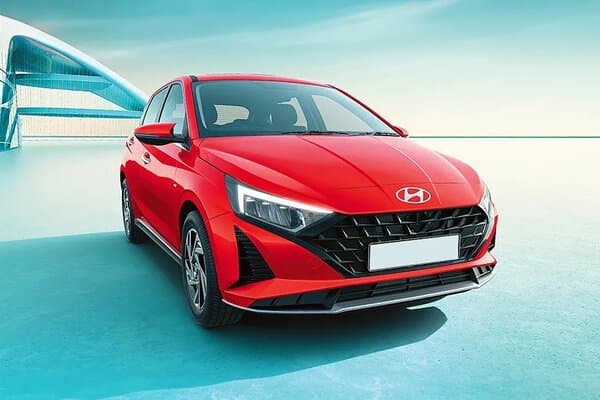
All of the action aside, the i20 has been designed to also look like quite the hot hatch, especially in the red colour that both my review units were in.
The Parametric Jewel pattern grille in black at the front contrasts well with the red but also blends with most of the colour options available - and there are six monotone and two dual-tone choices. The LED headlights are sleek and sharper than before while the fog lamps now come in a blackened casing to add a bit of visual panache. The stooping bonnet has an arrow-like style, brought out especially by the curving straight lines. But the stoop actually has a practical reason too - it improves the aerodynamic quotient of the car.
Over at the side, the i20 has a smart appeal courtesy the 16-inch alloys under the circular wheel arches, the twin character lines, the chrome door handles and the fly-back chrome belt line. The windows are sufficiently large and the rear quarter glass around the C-pillar seeks to give the cabin a more airy feel although I have mixed feelings about the blackened section here on the dual-tone version, complete with its three dash lines.
The rear profile of the car is, however, likely to attract the maximum extent of mixed reactions. The Z-shaped tail lights are quite a radical shift from conventional design languages while there is a single-line chrome strip connecting the two. Unlike what we have seen in the Aura and Grand i10 NIOS, the lettering here aren't imposing and that's keeping in line with the premium - not boisterous appeal. A shark-fin antenna and reflector strips complete the design language.
Cabin Chronicles and Feature Catalog
For me, the biggest changes on the new i20 though are on the inside and the feature lists that are on offer. It only makes sense then that this part is especially reserved for the last.
As such, this section deserves to be divided into four sub-sections for better explanation -
a) Layout:
The cabin on the new i20 is nothing like the one on the previous models. And while preceding models set a high benchmark and attracted a whole lot of glances, the third-generation gets elements which truly make it the most contemporary. A predominantly horizontal layout is marked by a smartly put out dash that is sculpted at the edges for a bit of muscle. The AC vents seamlessly integrate into the horizontal lines while the large infotainment screen sits much like it does in some of the other Hyundai offerings. The AC control buttons are well within reach although I personally prefer those large rotary knobs with display.
The steering can be adjusted for rake and reach while also housing controls to manage the large driver display screen and the main infotainment unit.
The generous use of hard plastics though work against the premium quotient that is otherwise amply evident here.
b) Space and comfort
The new i20 is 41mm wider, is 10mm longer and the wheelbase has gone up by 10mm from the outside but this actually does help the car to now offer more space on the inside when compared to the Elite i20. Rear leg room is up by 88mm while shoulder room goes up by 40 mm.
All of these are not mere numbers but actually add to the spacious feel inside this car. There is a whole lot of knee room, decent leg room and generous under-thigh support for the passengers at the rear, even if the front seats are pulled significantly back. Headroom is just about adequate though but the large windows do make this cabin a pleasant place to be in.
There is also a central arm-rest - minus cup holders - and the rear passengers get dedicated AC vents and a USB fast-charging point.
All the seats are nicely cushioned and the front seats in particular are scuplted well to keep the driver and passenger nicely planted. While I did feel that a bit more lower back support could have been incorporated, there is little doubting the fact that long journeys are unlikely to be any trouble for passengers in this car.
The boot is now slightly larger at 311 litres but the rear seats either fold completely or not at all. Here, a 60:40 split ratio would have added to the customization option.
Something that often goes missing are floor mats but these do beg a special mention here. In the review units I drove, the mesh-type mats ensured that the road dust and grime did not spread to the foot-well area while a 5D carpet underneath means that taking out the entire set up, brushing it and putting it back on the velcro strips is an absolute breeze. For a person with OCD like me, this may just be the biggest plus!
c) Feature list
Hyundai is no Uncle Scrooge when it comes to features and the i20 2020 richly benefits from all the latest that the company has on offer here in India. And then some more.
The 10.25-inch infotainment screen is bright and simple to use - negating sun glare with ease, while the large Digital Cluster with TFT MID also puts out information in a bold and vibrant manner. The company's BlueLink technology makes its debut in the i20 which allows interaction through smartphones and voice commands. Map updates will be over-the-air (OTA) which means you don't have to take the car to dealerships for a periodic refresh.
Then there is a large section just under the dash - on the center console - for wirelessly charging your compatible phone. This also gets a cooling pad to ensure that the smartphone doesn't get heated up while the battery gets replenished. If your phone doesn't support wireless charging, fret not. There is a fast-charging USB point, a regular USB point and a 12v charging socket for more options.
Hyundai is also underlining the India debut of the Oxyboost Air Purifier which claims to not just clean the cabin air off pollutants but increase the level of oxygen as well. Since there was no scientific way for me to test it out, I'll just take their word for it.
There is just no doubting the prowess of the sound system though as the Bose set up truly brings out the best of any genre of song we played on it. There are two tweeters on the dash, two front speakers, two rear speakers and a sub-woofer - enough to really have a concert of sorts on four wheels.
And sitting pretty above all of these is a one-touch electric sunroof. I personally can never see the utility of a sunroof in India but there is a strong market demand for it. As such, that the sunroof has now been incorporated into the i20, adds to its resume.
d) Safety on board
Hyundai claims that the i20 has a stronger body structure and higher crash worthiness than ever before. Much like the air purifier, we will only have to take the company's word on it. That there are six airbags, Vehicle Stability Management and Electronic Stability Control, Hill Assist Control and rear parking camera with guidelines do, however, give more of a concrete proof that Hyundai has made the new i20 safer for the driver and passengers.
Verdict
The rampant and radical changes in the third-generation i20 make it stand far from the model it replaces now in the Indian market. It is good to see that while the market may have a fondness for SUVs, the car maker has retained its fondness for its hatchback as well. Choices are galore when it comes to engine and transmission options, variants, colours and more while the bump up in space, looks and feature list are several steps in the right direction.
The Achilles heel for the i20 2020 though is in its price structure. The car starts at ₹6.79 lakh (introductory, ex showroom) for the Magna in the 1.2 petrol with manual transmission, and goes all the way to ₹11.17 lakh for the Asta (O) in the 1.0-turbo with DCT. Now that is straight in the territory of sub-compact SUVs and touching the base of some of the compact SUVs in the market.
(Also read | Hyundai i20 2020 vs compact SUVs: Price comparison)
Price comparisons to its rivals like Altroz and Baleno - cars with their own sets of strengths - are but obvious. What the i20 does offer though is a whole lot of spunk when it comes to drive dynamics, perhaps the best-looking package (looks, of course, are subjective) and a car packed with features.
If budget isn't the biggest factor for a buyer, the i20 2020 from Hyundai is an extremely strong product to consider.
Hyundai i20 is available in the 8 Colours in India.
View all Popular Hatchback Cars
AI generated summary
Users appreciate the Hyundai model for its refined performance, sharp handling, and modern features like a sunroof, but some mention limitations in low-end torque and slightly high fuel consumption.
| Max Power | 82-87 bhp |
| Airbags | Yes |
| Body Type | Hatchback |
| Max Torque | 114.7 Nm |
| Mileage | 16-17.75 kmpl |
| Transmission | Manual,automatic |
| Engine | 1197 cc |
| Fuel Type | Petrol |
Hyundai i20 in India is available in Petrol variants. Average mileage of Hyundai i20's petrol variant is 20.35 (As claimed by the brand in ideal road conditions). Hyundai i20 Sportz 1.2 MT comes with a 37 litres fuel tank.
Popular Hyundai Cars