

Yamaha YZF-R2 Key Specs
- Engine204 cc
- Power26.5 ps
- Max Torque19.1 Nm
- Kerb Weight150 kg

 1 Oct 202630 Aug 202628 Aug 202627 Aug 202627 Aug 2026

| BIKE | IMAGE | EX-SHOWROOM PRICE | USER RATINGS | ENGINE | POWER | TORQUE | BODY TYPE | KERB WEIGHT | LENGTH | FRONT BRAKE | REAR BRAKE | WHEEL TYPE | COMPARISON |
|---|
| BIKE | IMAGE | EX-SHOWROOM PRICE | USER RATINGS | ENGINE | POWER | TORQUE | BODY TYPE | KERB WEIGHT | LENGTH | FRONT BRAKE | REAR BRAKE | WHEEL TYPE | COMPARISON |
|---|---|---|---|---|---|---|---|---|---|---|---|---|---|
| Yamaha YZF-R2 | Rs. 2.31 LakhsOnwards | - | 204 cc | 26.5 PS | 19.1 Nm | Sports Bikes | 150 kg | 1980 mm | Disc | Disc | Alloy | ||
| KTM RC 200 | Rs. 2.15 LakhsOnwards | 199.5 cc | 25.8 PS | 19.5 Nm | Sports Bikes | 160 kg | - | Disc | Disc | Alloy | YZF-R2VSRC 200 | ||
| Suzuki Gixxer SF 250 Flex Fuel | Rs. 2.17 LakhsOnwards | - | 249 cc | 27.9 PS | 22.2 Nm | Sports Bikes | - | - | Disc | Disc | Alloy | YZF-R2VSGixxer SF 250 Flex Fuel | |
| KTM 250 Duke | Rs. 2.17 LakhsOnwards | 250 cc | 31 PS | 25 Nm | Sports Naked Bikes, Sports Bikes | 162.8 kg | - | Disc | Disc | Alloy | YZF-R2VS250 Duke | ||
| TVS Apache RR 310 | Rs. 2.62 LakhsOnwards | 312.2 cc | 38 PS | 29 Nm | Sports Bikes | 174 kg | 2001 mm | Disc | Disc | - | YZF-R2VSApache RR 310 | ||
| TVS Apache RTR 310 | Rs. 2.42 LakhsOnwards | 312.12 cc | 35.6 PS | 28.7 Nm | Sports Naked Bikes, Sports Bikes | - | 1991 mm | Disc | Disc | Alloy | YZF-R2VSApache RTR 310 |
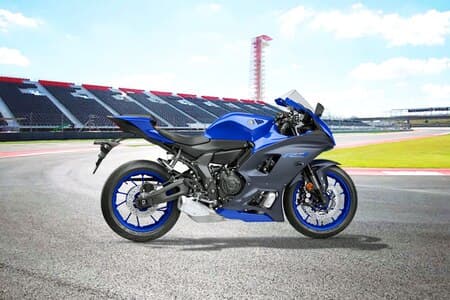
The Yamaha YZF-R2 occupies an interesting position in Yamaha’s India line-up. It looks familiar enough to remind you of the R15, yet underneath the fairing sits an entirely new 204 cc engine and a different chassis. Yamaha has also added more power, extra electronic aids and a slightly more accommodating riding position, while keeping the motorcycle remarkably light.
At first glance, the R2 can easily be mistaken for a modified R15. The overall silhouette follows the same Yamaha supersport theme, but there are plenty of changes when you look closer. The front-end treatment takes cues from Yamaha’s larger R-series motorcycles, with a projector headlamp flanked by LED DRLs.
The biggest issue with the styling is that the R2 does not immediately look like a completely new motorcycle. That familiarity may work in its favour for existing R15 fans, although some buyers may have expected a more distinctive design. Build quality otherwise feels solid, with the switchgear and overall finish giving the bike a premium impression.
The biggest mechanical change is the engine. The R2 uses a 204 cc, single-cylinder, liquid-cooled DOHC motor producing 26.5 PS at 10,000rpm and 19.1Nm at 8,000rpm. Unlike the R15, it does not use variable valve actuation, but the larger-capacity engine makes more power and torque.
On track, the engine feels strongest as the revs build. There is useful performance in the lower and middle parts of the rev range, but the real character appears as you approach the upper reaches of the rev counter. The motor continues pulling strongly towards its redline, making it well suited to a circuit where keeping the engine on the boil is part of the fun.
What stands out is how linear the power delivery feels. There isn't a dramatic hit when the throttle is opened, and the engine remains predictable even when you are exiting corners. That makes the R2 easy to ride quickly, especially for riders who are still building confidence on a racetrack. One trade-off is that some riders may find it almost too polished, particularly when compared with motorcycles that deliver a sharper rush of acceleration. At sustained high rpm, some vibration does make its way through the handlebar, tank and footpegs. Also, I am not particularly a fan of how the engine sounds at higher revs.
The R2 comes with a six-speed gearbox, assist and slipper clutch and, depending on the variant, a bi-directional quickshifter. On paper, that makes the motorcycle well equipped for spirited riding.
In practice, I felt the gearbox to be quite precise, but the quickshifter can feel abrupt, particularly during downshifts, and was not always as seamless as expected. The system remains useful when riding aggressively, but it does not deliver the polished feel some rivals manage with their quickshifter calibration.
The R2’s light weight is one of its biggest strengths. The standard bike weighs 149kg, while the higher variants are around 150kg, helping it feel nimble when changing direction.
The motorcycle turns in naturally rather than feeling overly sharp or nervous. Once leaned over, it settles into a line and remains composed, allowing the rider to focus on cornering rather than constantly correcting the bike. That predictability is particularly useful at a circuit like Madras International Circuit, which has a mix of slower corners and faster, sweeping sections.
Interestingly, Yamaha has moved away from the R15’s more expensive Deltabox-style chassis to a tubular diamond frame. Despite the change in architecture, the R2 still delivers the stable and agile behaviour expected of a Yamaha supersport.
The suspension package consists of a 37mm USD fork at the front and a linked monoshock at the rear, with adjustability available on the higher-spec R2M. The suspension impressed during the track session by not upsetting the chassis, but because it was a track, we cannot really comment on how the bike performs in our Indian road conditions.
The R2 gets a radial four-piston front brake calliper in the front. However, the overall brake package doesn't feel as strong as the rest of the motorcycle. Initial bite and progression are reasonable, but the lever can feel somewhat soft when braking hard.
The bigger concern emerged as the track session progressed. Under repeated heavy braking, brake fade became noticeable, and ABS intervention became more intrusive. We don't know how the brakes perform out on the roads, so this is something that we will have to wait and see.
The tyres are another area where the chassis appears capable of more than the standard rubber can comfortably deliver. The R2 uses MRF Nylogrip Zappers in 100/80-17 front and 140/70 R17 rear sizes. They are adequate for everyday riding and some spirited use, but harder track riding reveals limitations in outright grip and front-end feedback.
The riding position strikes a useful middle ground. The seat height is 810mm, while the overall riding triangle is less aggressive than the R15 without abandoning the committed stance expected from a fully faired sportbike.
There is enough room for taller riders to move around the bike when cornering, while the clip-ons are not positioned so aggressively that the motorcycle immediately feels impractical. This should make the R2 easier to live with than a more focused supersport, although a proper road test is needed to assess long-distance comfort.
The R2 gets a 5-inch colour TFT instrument cluster, riding modes, traction control, dual-channel ABS, LED lighting, Bluetooth connectivity and an assist and slipper clutch. The mid-spec version adds a bi-directional quickshifter, while the R2M gets additional equipment such as adjustable levers, keyless operation and adjustable front suspension.
The TFT is easy to read and offers multiple layouts, including a track-oriented display with a lap timer. There are also Street, Rain and Sport modes, along with a custom mode that allows riders to configure power mode and traction control.
The Yamaha YZF-R2 is less about shocking you with outright performance and more about making speed accessible. Its 204 cc engine has enough performance, while its lightweight chassis and predictable handling make the bike easy to place and enjoyable through a series of corners.
The R2 has a different frame, a larger engine and less aggressive ergonomics, yet still delivers the light-footed, confidence-inspiring character expected from a Yamaha R-series motorcycle.
There are shortcomings. The tyres could offer more feedback; the brakes can feel soft, and repeated hard braking brings out fade and ABS intervention. The quickshifter also isn't as slick as expected. But the core package works particularly well.
However, the bigger thing is that it is priced between ₹2.3 lakh and ₹2.53 lakh. At this price, there are motorcycles like the Triumph Tracker 400 and the Royal Enfield Guerrilla 450 with much larger and more powerful engines.
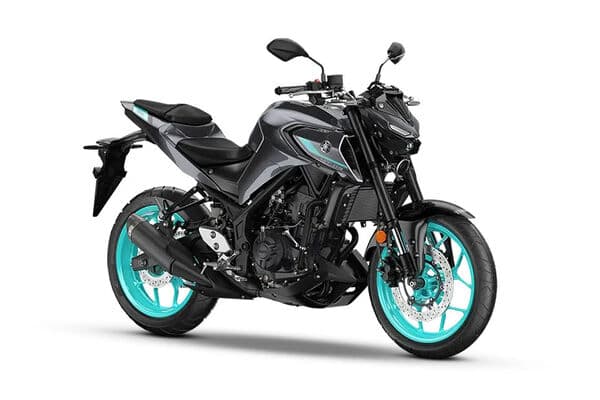
Yamaha YZF-R2 is available in the 4 Colours in India.
| Max Power | 26.5 PS |
| Body Type | Sports Bikes |
| Max Torque | 19.1 Nm |
| Transmission | Manual |
| Traction Control | Yes |
| Headlight | LED |
| Engine | 204 cc |
| Fuel Type | Petrol |
Popular Yamaha Bikes
View all Popular Sports Bikes