Bajaj Pulsar 125 Key Specs
- Engine124.38 cc
- Mileage51.46 kmpl
- Power11.8 ps
- Speed99 kmph
- Max Torque10.8 Nm
- Kerb Weight142 kg


 12 Sept 202626 Aug 202625 Aug 2026

| BIKE | IMAGE | EX-SHOWROOM PRICE | USER RATINGS | ENGINE | POWER | TORQUE | BODY TYPE | KERB WEIGHT | LENGTH | FRONT BRAKE | REAR BRAKE | WHEEL TYPE | COMPARISON |
|---|
| BIKE | IMAGE | EX-SHOWROOM PRICE | USER RATINGS | ENGINE | POWER | TORQUE | BODY TYPE | KERB WEIGHT | LENGTH | FRONT BRAKE | REAR BRAKE | WHEEL TYPE | COMPARISON |
|---|---|---|---|---|---|---|---|---|---|---|---|---|---|
| Bajaj Pulsar 125 | Rs. 92,990Onwards | 124.4 cc | 11.8 PS | 10.8 Nm | Commuter Bikes | 142 kg | 2042 mm | Disc | Drum | Alloy | |||
| Hero Super Splendor XTEC | Rs. 84,448Onwards | 124.7 cc | 10.84 PS | 10.6 Nm | Commuter Bikes | 121 kg | 2034 mm | - | - | Alloy | Pulsar 125VSSuper Splendor XTEC | ||
| Hero Splendor Plus XTEC | Rs. 81,283Onwards | 97.2 cc | 8.02 PS | 8.05 Nm | Commuter Bikes | 112 kg | 2000 mm | Disc | Drum | Alloy | Pulsar 125VSSplendor Plus XTEC | ||
| Hero Passion Plus | Rs. 80,328Onwards | 97.2 cc | 5.9 kW | 8.05 Nm | Commuter Bikes | 116 kg | 1982 mm | Disc | Drum | Alloy | Pulsar 125VSPassion Plus | ||
| Hero Glamour X | Rs. 88,517Onwards | 124.7 cc | 11.5 PS | 10.5 Nm | Commuter Bikes | 127 kg | 2045 mm | Disc | Drum | Alloy | Pulsar 125VSGlamour X | ||
| Honda CB125 Hornet | Rs. 1.03 LakhsOnwards | 123.94 cc | 11.14 PS | 11.2 Nm | Commuter Bikes | 124 kg | 2015 mm | Disc | - | Alloy | Pulsar 125VSCB125 Hornet |
While the story of the Bajaj Pulsar 125 entering the Indian market started in August 2019, you may be surprised to know it actually began as an idea placed on one of the original drawing boards of the first Pulsar in the early 2000s. However, it did not make it through the brainstorming sessions and gave way to the Pulsar 180 instead, alongside the 150. But close to two decades later, the discussions returned to paving the path for a more affordable but similar-looking Pulsar. The expectations were to deliver enough performance while balancing fuel economy too.
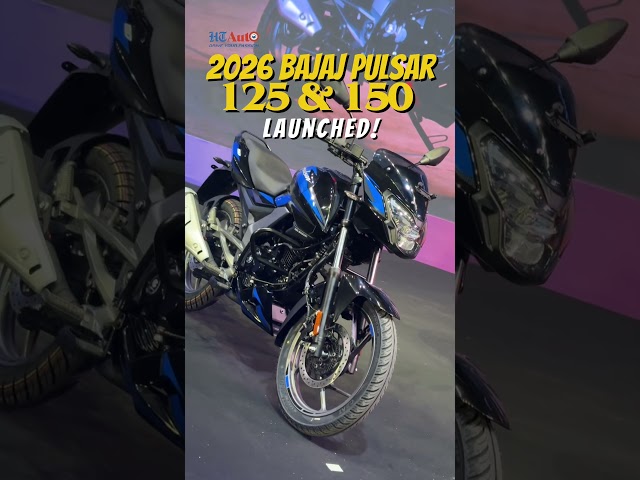
The biggest change is the design, although Bajaj has deliberately stopped short of making the Pulsar 125 radically different. The updated motorcycle gets a redesigned headlamp with a black plastic surround, but one glance is enough to tell that this is most definitely a Pulsar. It bears similarities to the newer 150 as well as the outgoing motorcycle.
Some may not particularly like the familiarity, but Bajaj says its customers wanted the same design language to be retained. Personally, I think the bikemaker has understood the assignment well given the context of that feedback. The new design looks a tad sharper without losing the identity that made the Pulsar 125 recognisable in the first place.
The tank has also been sculpted on the lower half so that your knees can hug it while riding. That makes a noticeable difference when you are leaning into corners and gives you a stronger sense of confidence. The tail section is sharper too, while the exhaust has been reshaped into a hexagonal unit.
The more significant changes are underneath. The engine has been reworked to make it lighter and now acts as a load-bearing member of the chassis. Bajaj says the Pulsar 125 has shed around 15 kg overall, with an 8 kg reduction coming from the engine and another 7 kg from the chassis.
The motorcycle also moves from a dual-shock setup to a monoshock arrangement. On the roads we rode it on, the new suspension worked quite well. It is set up slightly on the stiffer side, but I did not find that particularly problematic.
The alloy wheels are another highlight visually and come as standard across variants. They look good on the bike and are the same wheels used on the Pulsar 150.
The Pulsar 125 performs well and feels easy to ride, especially in traffic. The clutch is super light and effortless to operate, which is exactly what you want from a commuter that will spend plenty of time filtering through congested roads.
The bike also feels pretty confident when cornering, staying true to the Pulsar DNA. Leaning it into bends was enjoyable and, importantly, it never felt nervous or unsettled. Our riding time was limited, so I would not call this a thorough assessment of its handling, but the first impression was certainly a positive one.
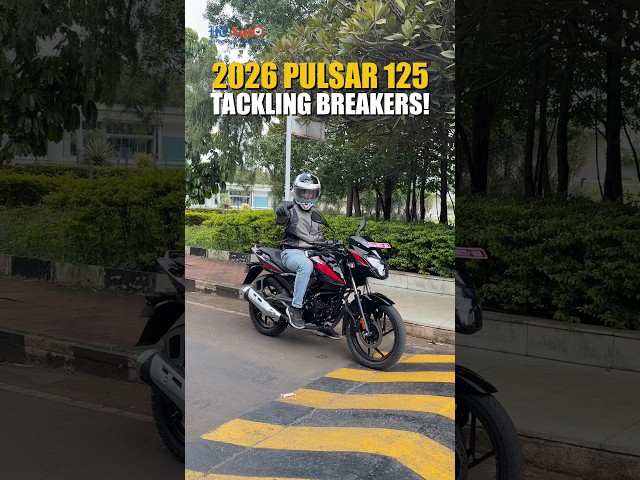
The bigger disappointment was the braking. We rode the basic variant with combi brakes, and they were not particularly enjoyable to use. The foot lever requires quite a bit of effort to press owing, which put noticeable strain on the ankle. The front brake did not impress either, with the bite feeling less sharp than. In traffic, therefore, the Pulsar 125 is a breeze to ride until you need to tackle stop-and-go situations.
The base variant gets a simple LED display with a black background. It remains easy to read even under bright sunlight, and the contrast works well. The layout is clean, the fonts are readable, and Bluetooth connectivity is supported. However, like in the earlier models, there is noticeable lag in the gearshift indicator, which occasionally leads to confusion.
We rode the single-seat and single-disc variant, and the ergonomics are largely unchanged from the outgoing Pulsar 125. Your wrists remain fairly straight on the clip-on handlebars, so there is no obvious strain over the course of a ride.
The single seat is well cushioned, although I would personally prefer it to be about an inch wider. The switchgear also feels reasonably good in terms of quality, especially considering the price point.
The 2026 Bajaj Pulsar 125 feels like a thoughtful update rather than a complete reinvention. Bajaj has kept the familiar Pulsar styling that buyers apparently wanted, while addressing the motorcycle's construction, suspension and overall weight.
The engine and chassis shedding around 15 kg is perhaps the most interesting change because it has the potential to influence everything from handling to efficiency. What will ultimately be interesting to find out is how much fuel economy this motorcycle can actually deliver in the real world, especially since Bajaj claims an improvement of approximately 5 kmpl.
For now, the 2026 Pulsar 125 has made a promising first impression. It feels lighter, remains easy to ride and is more enjoyable through corners, though the braking setup and the laggy gear indicator leave room for improvement.
AI generated summary
The Bajaj Pulsar 125 is praised for its sporty design, good mileage, and reliable performance, making it a popular choice among commuters. However, some users report issues with weight and outdated features.
| Max Power | 11.8 PS |
| Body Type | Commuter Bikes |
| Charging Point | Yes |
| Max Torque | 10.8 Nm |
| Kick and Self Start | Yes |
| Mileage | 51.46 kmpl |
| Transmission | Manual |
| Headlight | Halogen |
| Engine | 124.38 cc |
| Fuel Type | Petrol |
| Max Speed | 99 kmph |
Popular Bajaj Bikes
View all Popular Commuter Bikes