'It becomes a vicious cycle': Ravindra Patki on why India's auto MSME suppliers are struggling to invest

- Ravindra Patki, Managing Partner at Vector Consulting Group, explains why India's auto MSME suppliers are caught in a cycle that is limiting their ability to invest in new capabilities, in an exclusive interaction with HT Auto.
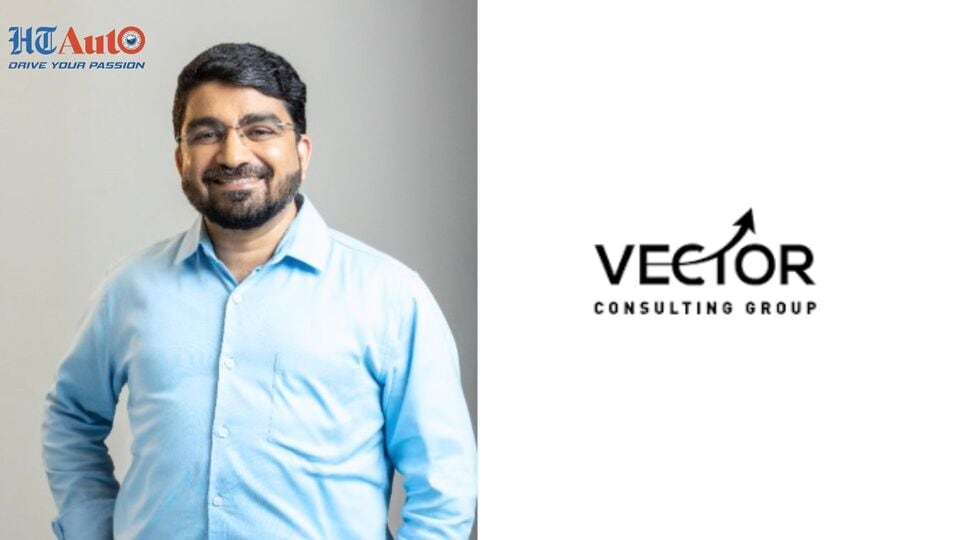
India's automotive industry is preparing for a major technological shift. Electric vehicles, batteries, power electronics, embedded software and other emerging technologies are expected to play a much bigger role in the years ahead. However, a recent study by Vector Consulting Group has raised concerns about whether India's existing automotive supplier base, particularly its MSMEs, is prepared to keep pace with this transition.




The consulting firm's white paper, The Broken Flywheel: Building a Future-Ready Automotive Supply Ecosystem, found that 95 per cent of industry leaders believe MSME suppliers are not investing quickly enough in capabilities needed for future growth. The report also highlighted a significant gap in areas such as systems integration, product development, embedded software and advanced engineering.
Trending Cars




According to the study, operational inefficiencies and high inventory levels are also tying up large amounts of capital within the auto component industry. Vector estimates that improving inventory management across the sector could potentially release between ₹29,000 crore and ₹39,000 crore in working capital.
But why are suppliers unable to invest faster? What is preventing them from building new capabilities? And what role do OEMs need to play in helping smaller suppliers prepare for the future?
In an exclusive interaction with HT Auto, Ravindra Patki, Managing Partner at Vector Consulting Group, spoke about the challenges facing India's automotive MSME ecosystem, the capital trapped within existing operations, and the changes needed across the supply chain.
Q: You found that 95% of industry leaders feel MSMEs are not investing fast enough. Why aren't they investing faster?
Ravindra Patki: There are two aspects to this.
The first is that they have already invested in something, but the return on that investment has not been as high as they would have liked. Putting more money into the same business, therefore, becomes a challenge.
Some businesses feel that whatever they have already done is not helping them. Others are interested in investing but do not have access to capital because of their previous performance.
But whom will a bank lend to? A person or company that can repay the investment with interest, or one whose past performance suggests that it may struggle to do so?
Capital may be flowing into the industry, but it is not reaching these businesses because financiers are unwilling to support that investment. It becomes a vicious cycle in which they are currently stuck.
Q: A lot of money is tied up in inventory and inefficient operations. How can suppliers unlock that money and use it to build new capabilities?
Ravindra Patki: The first is that their internal lead times are longer. They have several stages in their processes, which means a significant amount of inventory remains stuck in the system. The second is that the customer gives them a production programme or requirement, and that requirement later changes. The supplier may have already manufactured something that is now stuck with them because the client wants something else.
The supplier then has to hold inventory that is not moving while entering urgency mode to produce and deliver what the client now requires immediately. Why does this change happen? Because the market is dynamic. That is a given. The problem is that this information is not passed on to Tier 1 and Tier 2 suppliers in real time.
Companies usually say, “My production line cannot stop, so as an OEM, I will only keep enough material for one shift or one day. Whenever something changes, I will inform the supplier." What we are suggesting is that keeping only two days of stock is not a problem. However, the OEM should pass information about how much stock it is carrying to the Tier 1 supplier. The Tier 1 supplier should then pass this information to Tier 2 suppliers.
They need visibility into what is actually moving from the OEM in terms of engines and components. That gives suppliers enough time to react and prevents them from producing something that the OEM is no longer going to consume, at the cost of something that it suddenly needs immediately.
The industry needs to move away from projection- or forecast-based systems towards highly reactive buffer-management systems. These buffers create a shock absorber within the system. This helps MSMEs and Tier 1 suppliers avoid building excessive inventory while protecting them from urgent requirements coming from OEMs.
That change has to happen at an ecosystem level. Can an individual MSME do it? Yes, it is possible. It can build its own systems and buffers. However, support from a larger organisation can make a much bigger difference. Instead of one supplier trying to solve the problem individually, one OEM can solve it for 400 or 500 suppliers. That is the scale of change that is possible.
Q: As more vehicle value moves towards software, electronics and batteries, which capabilities should Indian suppliers prioritise first?
Ravindra Patki: There are three areas, which were also mentioned by Honourable Minister H.D. Kumaraswamy.
The first is lithium. We need to build capabilities for lithium mining because that can reduce India’s dependence - and, in fact, the world’s dependence on China.
Once lithium has been mined, it has to be converted into a chemical form that can be used to manufacture cells. Raw lithium by itself is not usable for this purpose. It has to be refined and processed into usable lithium.
Processing units need to be established for this.
The second area relates to permanent magnets used in electric motors. Mining may not necessarily be something these suppliers undertake. However, once rare-earth minerals are available, suppliers can work on sintering and converting them into magnets.
A mechanism is needed to source rare-earth minerals, either through imports or locally, and then process, sinter and convert them into magnets.
Sintering is a technical process. Companies need to understand the chemistry and the technology behind it. There are only a limited number of sintering companies in India, so there is an opportunity here.
Both these areas are process-oriented: converting lithium into material suitable for cells and converting rare-earth minerals into sintered magnets.
The third area is software technology in vehicles. There is scope for several smaller companies in the software domain to develop embedded systems for vehicles. That creates a significant domestic opportunity.
Q: What needs to change in the OEM-supplier relationship for capabilities to improve across Tier-2 and Tier-3 suppliers?
Ravindra Patki: When you develop a supplier, the nature of the relationship matters.
A transactional relationship means that today I purchase from you, but tomorrow I may purchase from somebody else. This is particularly relevant for build-to-print suppliers.
For a proprietary component, the OEM may know that it has limited alternatives. For example, if it requires a particular fuel pump, it may have to source it from Bosch.
However, build-to-print suppliers are different. If one supplier cannot fulfil the requirement, the OEM can move to somebody else because the cost of switching is relatively low.
In such a situation, if a supplier is expected to build capacity and capabilities for an OEM, it needs a certain level of assurance that the OEM will not leave it high and dry.
When we talk about developing an ecosystem, we are talking about building confidence between the OEM and the supplier.
The OEM should communicate that it understands the supplier’s environment, recognises that the supplier is technically capable and wants to grow together with it.
The OEM also needs to be willing to invest—not necessarily financially, but through technology, knowledge and supplier development.
That investment could involve sharing knowledge, introducing better processes and systems or providing access to technology.
Such ecosystem-level investments are required, but they are not possible when the relationship is purely transactional. As a supplier, I may always fear that the OEM could move to somebody else tomorrow.
That is the challenge the ecosystem needs to overcome.
OEMs need to adopt a “big brother" approach. In the same way that OEMs have traditionally supported Tier 1 suppliers, Tier 1 companies should begin supporting Tier 2 suppliers and MSMEs.
Q: India wants to increase localisation and global sourcing. Are our suppliers building capabilities fast enough to capture that opportunity?
Ravindra Patki: They are not currently able to build those capabilities quickly enough.
Whether they want to do it is one question. Whether they are able to do it is another.
The entire paper discusses what is preventing them from building these capabilities.
Any new capability requires investment. It requires money. However, that money may already be trapped in the existing business, either in inventory or in assets that are not generating sufficient returns.
If the existing assets are not producing enough output, the company is unable to generate enough money to repay those investments and build something new. Margins are another understood challenge.
If we solve that problem, there is enough money available within the system to help companies grow more quickly.
New technologies, particularly electric vehicles, have opened the door to many new suppliers and new OEMs.
We had never previously imagined two-wheeler manufacturers importing kits from China, assembling them in India and selling the finished vehicles. That was not something we saw during the internal-combustion-engine era, but it has now become possible.
At one end, there are companies with a trading mindset. At the other, several companies have genuinely invested in the business. Companies such as Ather and Ola were not originally part of the traditional automotive industry. They identified an opportunity, entered the market and invested in building their businesses.
However, much of that activity is taking place outside the traditional supplier ecosystem. These companies had no background in the existing system. They came from other businesses, saw an opportunity and decided to pursue it.
The willingness to invest exists.
However, to bring existing suppliers up to the required level, they need access to money. One way to provide that money is through subsidies, but there is a limit to how much the government can invest.
A better solution is to release the money that is already trapped inside the system.
If that money is released, a significant amount of capital becomes available.
The Honourable Minister mentioned that around ₹18,000 crore is being provided for battery-cell manufacturing. However, even with a planned capacity of 50 gigawatt-hours, utilisation remains quite low.
If part of that ₹18,000 crore-equivalent requirement can be generated from within the ecosystem itself, the burden on government schemes will reduce. The government can then deploy that money in areas where it is more urgently needed. That is why working on the ecosystem is important.
Get insights into Upcoming Cars In India, Electric Vehicles, Upcoming Bikes in India and cutting-edge technology transforming the automotive landscape.


Editor's Pick



Trending this Week