Indian auto component industry not fully ready for next-gen vehicles: Nirmal K Minda

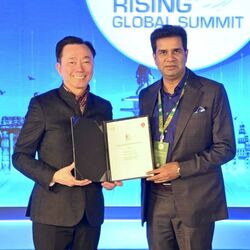
- In an exclusive interaction with HT Auto on the sidelines of ACMA 66th Annual Session, Uno Minda's Nirmal K Minda discusses India's readiness for next-gen vehicle technologies, the need to learn from China and why suppliers must prepare for both EV and ICE growth.

India's auto component industry needs to increase spending on research and development, build stronger cost competitiveness and improve quality consistency if it wants to compete with China in the next generation of vehicles, according to Nirmal K Minda, Chairman and Managing Director of Uno Minda.



Speaking to HT Auto on the sidelines of the ACMA 66th Annual Session, Minda said the Indian supplier ecosystem is not yet fully prepared for the technological changes expected in the automotive industry. However, he believes the country has the engineering talent and opportunity to close the gap over the coming years.
Trending Bikes
Asked whether the Indian auto component industry is prepared for the technological changes expected in next-generation vehicles, Minda said there is still considerable ground to cover.
"No, I don’t think so. Our engineers are working at Tesla, in Europe - we have very talented engineers. If we spend on talent and on R&D, and if we do proofs-of-concept with OEMs at the beginning stage of the vehicles, I think we can become like China in five to seven years," he said.
Minda also suggested that Indian suppliers should work with Chinese companies to learn from their progress in electric vehicle technology, rather than attempting to develop everything independently from the outset.
"But right now we should start working with China so that we can learn, because they have gone far ahead in the EV segment - even better than Japan and Europe. At this moment, this is the right opportunity to learn from them for another six or seven years, do localisation, and then become self-reliant," he added.
EV and ICE powertrains to grow together
While electric vehicles are expected to account for a growing share of India's automotive market, Minda believes internal combustion engine vehicles will continue to see demand as the overall industry expands.
"I think there is going to be a mix. We have to be self-reliant in fossil fuel in the country, so there’ll be a mix of EV and hybrid," he said.
He pointed out that several components are compatible with both electric and internal combustion engine vehicles, while suppliers focused on powertrain components may face greater changes in demand patterns.
"Some parts are EV-agnostic, some are ICE-agnostic. Particularly for powertrain suppliers, they will not be affected much because overall capacity will increase," Minda said.
According to him, India's annual vehicle production could increase from the current 4.5–5 million units to 10 million units over the next eight to 10 years. This growth, he believes, could create opportunities across both powertrain technologies.
"Today we are at about 4.5–5 million vehicles. This will go to 10 million over the next 8–10 years. So both EV and ICE will grow," he said.
However, Minda cautioned suppliers against committing too heavily to additional ICE capacity without considering how the market could evolve.
"But we have to be very careful about capacity increases in ICE. If you are in the powertrain space, it’s better to diversify your capital and start looking at the other side as well," he added.
Also Read : 'It becomes a vicious cycle': Ravindra Patki on why India's auto MSME suppliers are struggling to invest
Localisation and cost efficiency remain key
Minda also highlighted the need to reduce India's dependence on imported components while maintaining cost competitiveness.
"A lot of components are currently being imported, so we continue to focus on R&D and localisation. There is a big opportunity," he said.
On the cost pressures faced by suppliers from automakers, Minda described it as an ongoing challenge that companies must address through greater efficiency.
"This is an ongoing process that will always be there. We have to find avenues for cost competitiveness. It’s a chicken-and-egg story. If your technology is good, quality is good, and your approach to cost efficiency is good, OEMs are looking for a win-win," he said.
For Indian suppliers seeking to compete with established manufacturing hubs, Minda identified three areas that require greater attention: research and development, cost efficiency and quality consistency.
Get insights into Upcoming Cars In India, Electric Vehicles, Upcoming Bikes in India and cutting-edge technology transforming the automotive landscape.
Editor's Pick

Trending this Week