Hyundai Bayon N Line, Tucson N Line showcased at 2026 Paris Auto Show
Hyundai unveiled the Bayon N Line and Tucson N Line at Paris 2026, featuring sportier styling, upgraded interiors and turbo-petrol or electrified powertrains, with the Bayon N Line unlikely for India
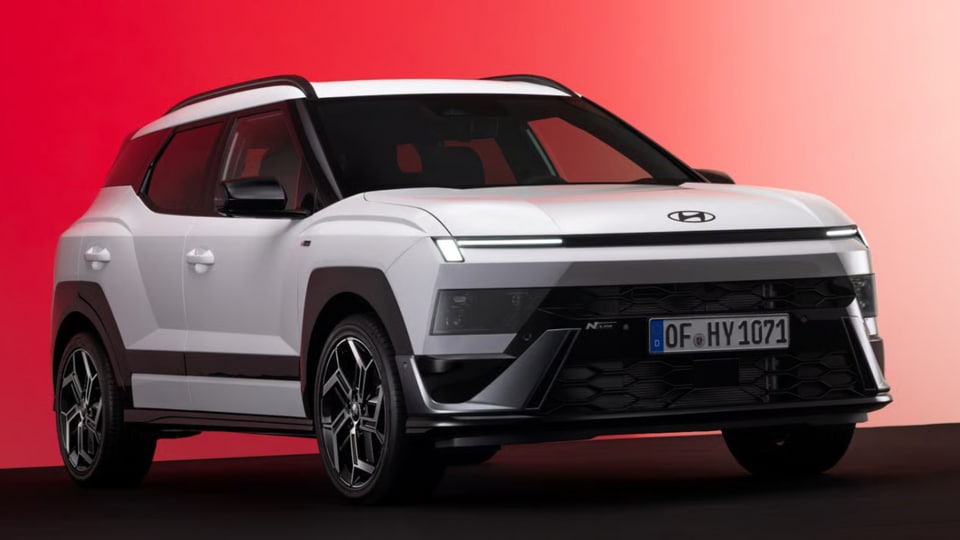


South Korean automaker Hyundai has unveiled the sporty Bayon N Line as well as the Tucson N Line at the 2026 Paris Auto Show. While the Bayon N Line gets sportier styling and turbo-petrol engine options compared to the India-spec model, the Tucson N Line features a range of electrified powertrains, revised exterior elements and a sportier cabin.
2026 Hyundai Bayon N Line: Exterior Design
The Hyundai Bayon N Line boasts the same overall design as the standard India-spec Bayon. However, it introduces several styling enhancements to give it a more aggressive appearance. Key design elements include L-shaped front and rear lighting signatures, squared-off headlamp units, boxy wheel-arch cladding, flared fenders, the Bayon lettering on the tailgate and a sharply kinked window line.
Also check these Cars


At the front, the N Line gets a redesigned bumper with larger openings, black cladding, winglet-style elements and a honeycomb-pattern grille. An N Line badge sits on the left side of the bumper, while the headlamps appear to feature smoked detailing. The side profile features gloss-black cladding, black outside rearview mirrors, N Line badges on the front fenders and larger 18-inch alloy wheels. The roof rails are also slimmer than those on the India-spec Bayon. At the rear, the sporty SUV gets a larger twin-ridge roof spoiler, dual exhaust outlets, a completely black bumper and black-finished Hyundai and Bayon lettering.
The European-spec Bayon measures 4,245 mm in length, 1,810 mm in width and 1,565 mm in height, with a wheelbase of 2,600 mm. Its dimensions place it between the Venue and Creta in Hyundai's SUV lineup. The India-spec version is expected to retain broadly similar proportions.
2026 Hyundai Bayon N Line: Interior and Features
The Bayon N Line shares its fundamental dashboard layout with the standard India-spec model. The cabin features two curved 12.3-inch displays, a vertically oriented centre console inspired by the fourth-generation i20, vertical air vents and an open storage area on the passenger side of the dashboard. However, the N Line introduces several sportier details, including an all-black cabin with red accents and contrast stitching. The seats feature suede-like upholstery, while the steering wheel and gear lever receive N Line-specific designs.
Equipment highlights include wireless Apple CarPlay and Android Auto, ambient lighting, a panoramic sunroof, heated and ventilated front seats, reclining rear seats, a digital key, an eight-speaker Bose audio system, Level 2 ADAS, connected-car technology, wireless smartphone charging and dual-zone climate control. Hyundai has not confirmed whether the European N Line will feature the generative AI-powered voice assistant planned for the India-spec Bayon. The European model offers 440 litres of boot space in non-hybrid configurations.
2026 Hyundai Bayon N Line: Engine and Transmission
Unlike the India-spec Bayon, which is expected to be offered exclusively with a 1.5L naturally aspirated four-cylinder petrol engine producing 115 hp, the European N Line gets a 1.0L three-cylinder direct-injection turbo-petrol engine with two states of tune, producing 90 hp and 115 hp. Transmission options include a six-speed manual and a seven-speed dual-clutch automatic, depending on the variant.
Moreover, the company claims a 0 to 100 kmph acceleration time of 10.8 seconds for the quickest version, likely the 115 hp DCT variant. The slowest configuration is expected to complete the sprint in 14.1 seconds, potentially referring to the 90 hp manual version. A strong-hybrid powertrain will join the European Bayon range at a later stage, combining a 1.6L direct-injection petrol engine with an electric motor and a six-speed DCT, delivering a combined output of 138 hp. The hybrid will also feature adaptive regenerative braking controlled through steering-mounted paddle shifters.
New-Generation Hyundai Tucson N Line: Exterior Design
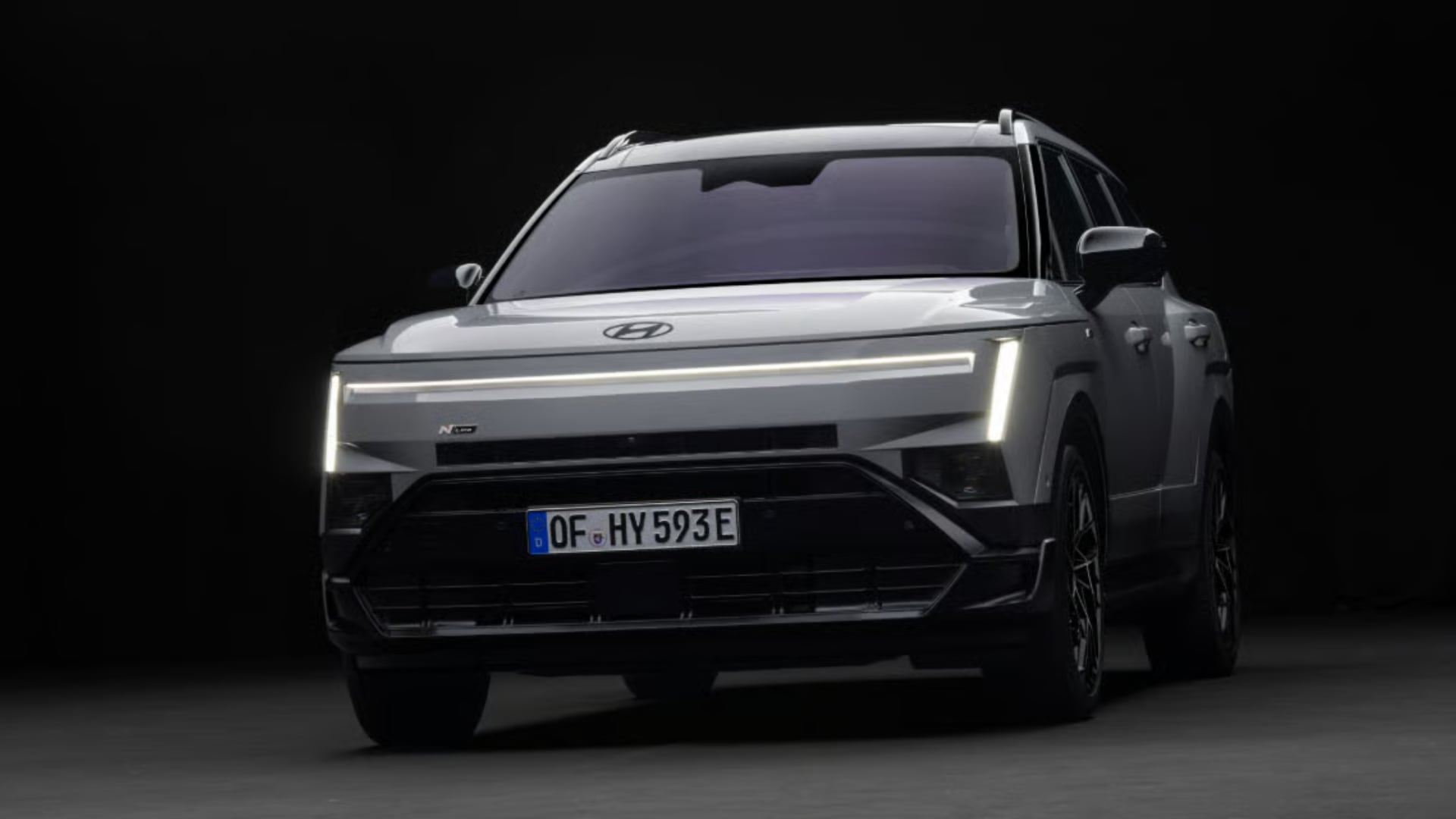
The South Korean automaker has revealed the new-generation Tucson N Line, following the global debut of the standard SUV at the Paris Motor Show 2026. The sporty variant receives a range of visual upgrades, including exclusive 20-inch alloy wheels, revised bumpers and N Line-specific exterior detailing. Hyundai has retained the standard Tucson's distinctive H-shaped lighting elements while adding sportier design features throughout.
At the front, the SUV gets a prominent chin spoiler, satin-black air ducts and sharper lower bumper sections. The side profile features body-coloured side skirts, slimmer wheel-arch cladding, gloss-black ORVMs and black C-pillar inserts. At the rear, a sculpted bumper with diffuser-inspired detailing and twin exhaust outlets distinguishes the N Line from the standard model. Exclusive alloy wheels and N Line badges complete the exterior changes.
Also Read : Kia Seltos Hybrid showcased at 2026 Paris Auto Show; India launch expected in 2027
New Hyundai Tucson N Line: Interior and Features
The Tucson N Line's cabin features a predominantly black colour scheme complemented by red stitching on the seats, dashboard and door panels. The front seats combine leather and textile suede upholstery, while the N Line-specific steering wheel gets perforated leather grips and dark-metal accents. Additional sporty touches include metal pedals, a matching footrest and N Line-branded scuff plates.
The SUV features a 4:2:4 split-folding rear seat with 150 mm of sliding adjustment. Hyundai claims a luggage capacity of up to 613 litres, making the Tucson suitable for family use despite its sportier positioning. The dashboard boasts a 17-inch touchscreen running Hyundai's Android Automotive-based Pleos Connect infotainment system. The setup includes Gleo AI voice assistance for online queries, while compatible functions can receive over-the-air software updates.
Other available equipment includes a 12-speaker Bang & Olufsen sound system, Digital Key 2.0, two 15W Qi 2.0 wireless charging pads and two 100W USB-C charging ports for rear passengers. The safety and driver assistance package includes Forward Collision-Avoidance Assist 2.0, Highway Driving Assist 2.0, Parking Collision-Avoidance Assist and Child Presence Detection. Depending on the variant, buyers can also get Micro Pixel Lighting, which uses 25,600 individual LED pixels for beam control and welcome animations, Remote Smart Parking Assist and a Digital Centre Mirror. Hybrid variants additionally feature Stay Mode, designed to enable quieter operation when the vehicle is stationary.
New Hyundai Tucson N Line: Engine and Powertrain Options
The new Tucson N Line will be offered with three electrified petrol powertrains: a 48V mild-hybrid system, a conventional hybrid and a plug-in hybrid. All three configurations feature the SUV's sporty design package and 20-inch N Line alloy wheels.
The entry-level powertrain uses a 1.6L T-GDi turbo-petrol engine with 48V mild-hybrid assistance, producing 148 hp paired with a seven-speed dual-clutch transmission, which sends power to the front wheels. The conventional hybrid combines the 1.6L turbo-petrol engine with a 1.49 kWh battery, delivering a combined output of 242 hp, paired with a six-speed automatic transmission and is available with either front-wheel drive or all-wheel drive. At the top of the range, the plug-in hybrid produces 288 hp and uses a larger 17.1 kWh battery. Hyundai claims an electric-only driving range of up to 67 km for this configuration when equipped with the N Line's 20-inch wheels. Both front-wheel-drive and all-wheel-drive versions are planned.
Check out Upcoming Cars in India 2026, Best SUVs in India.
Editor's Pick



Trending this Week